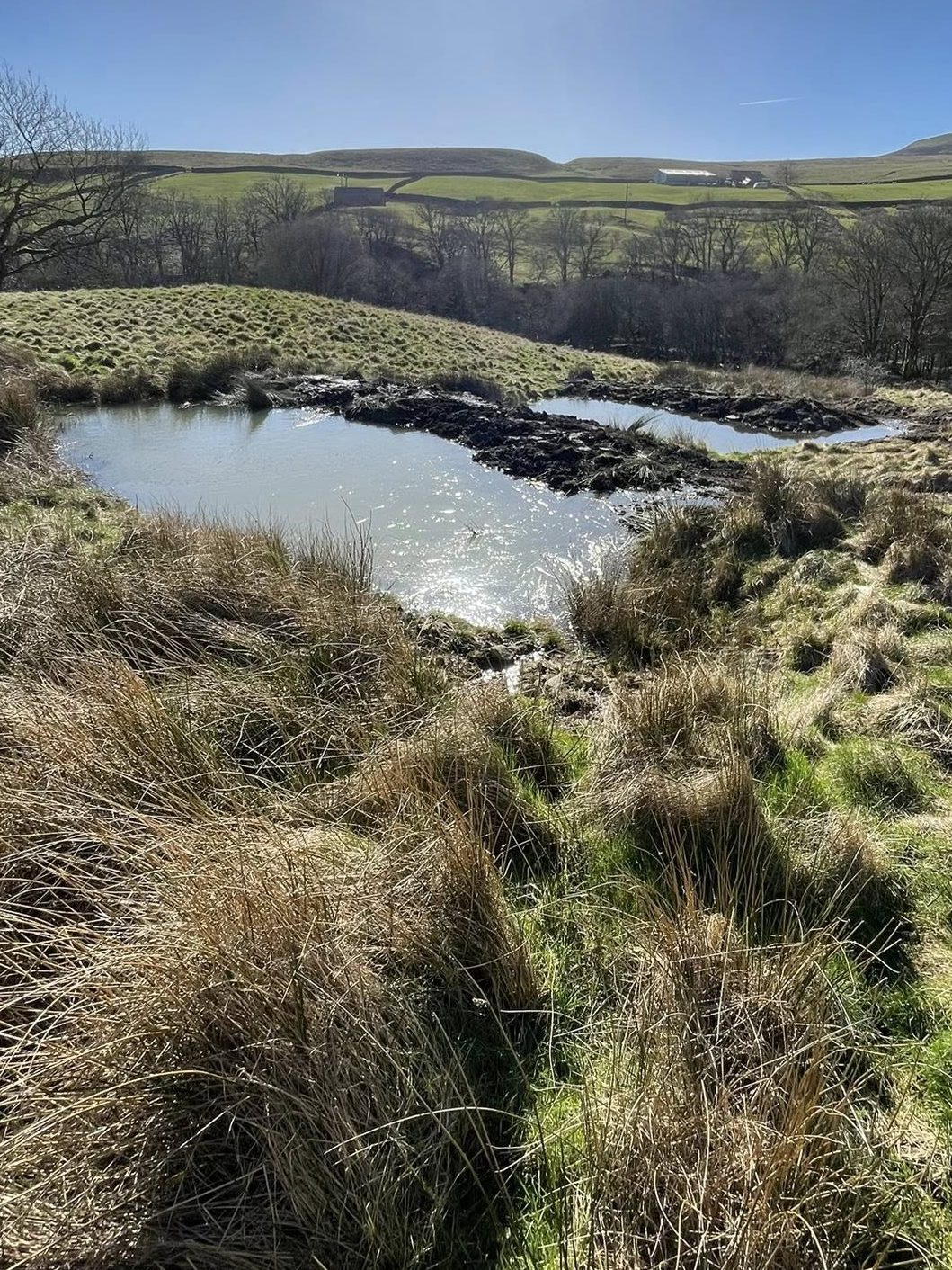
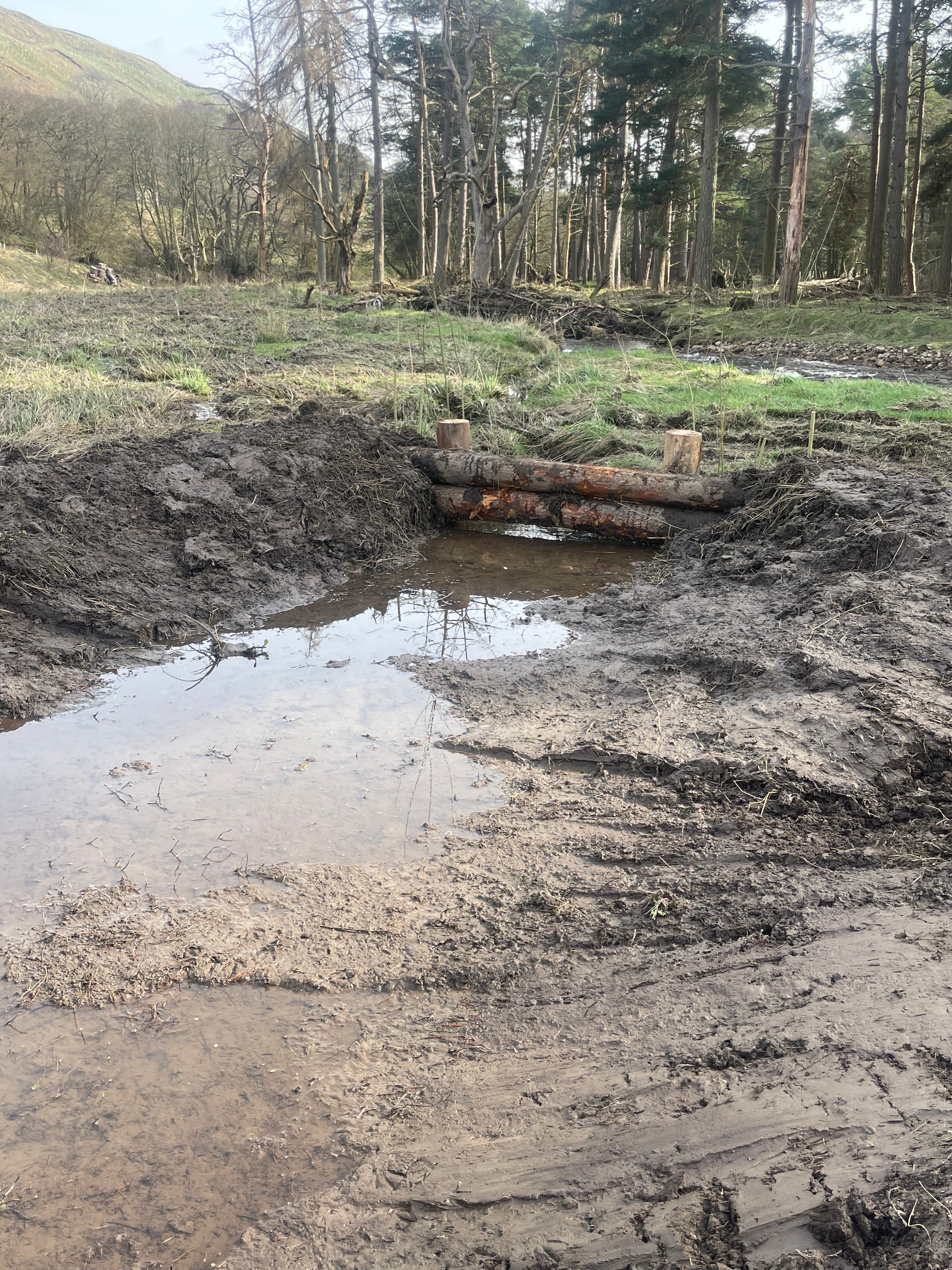
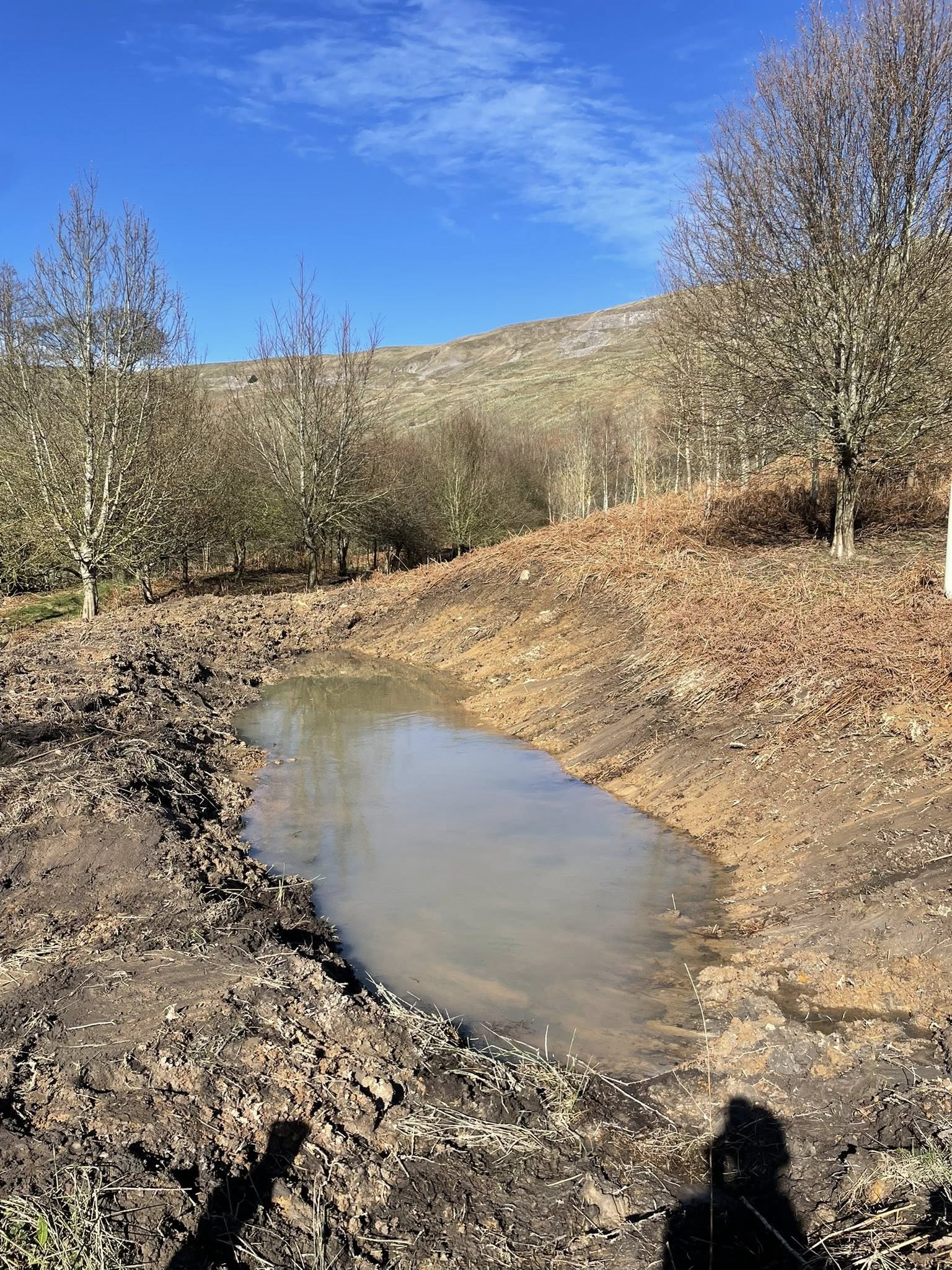
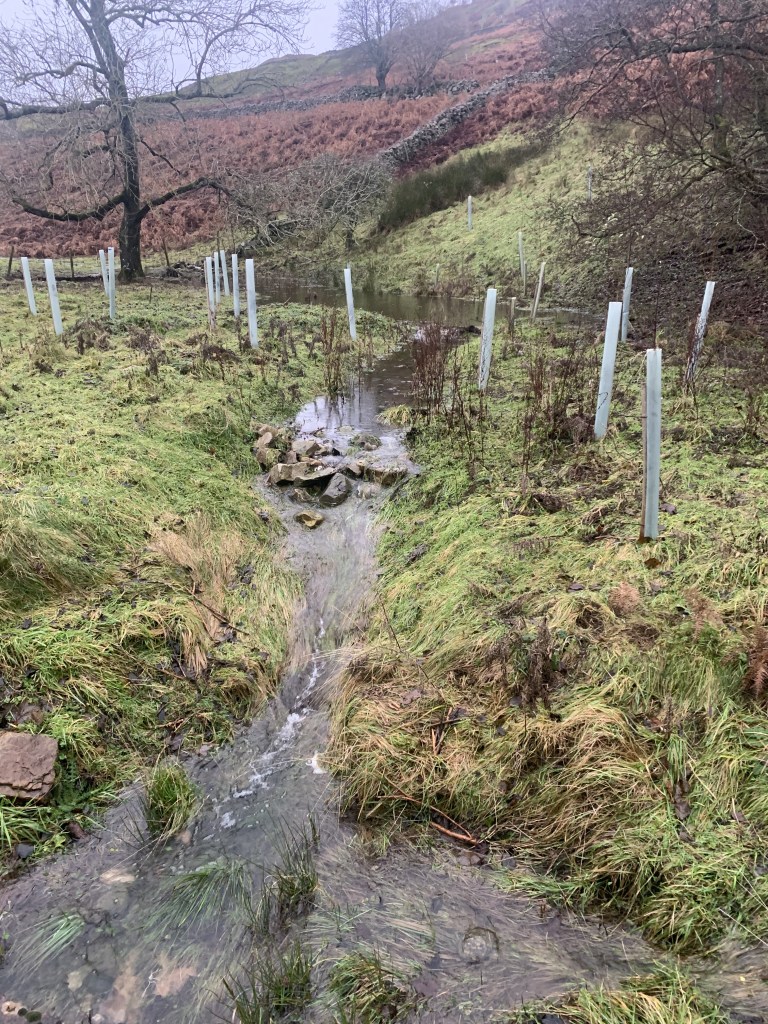
First of the new scrapes just above the bridge at Castle
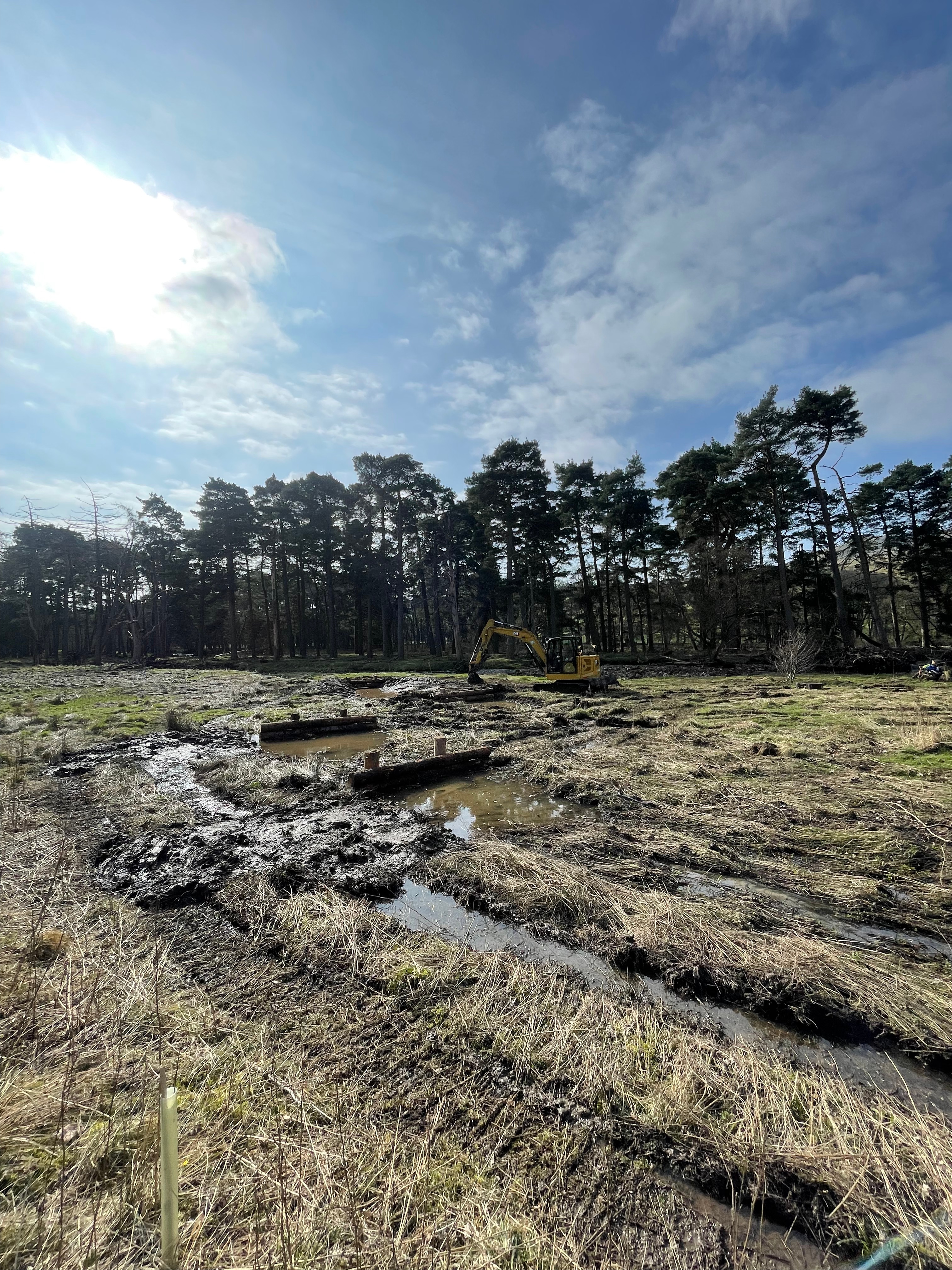
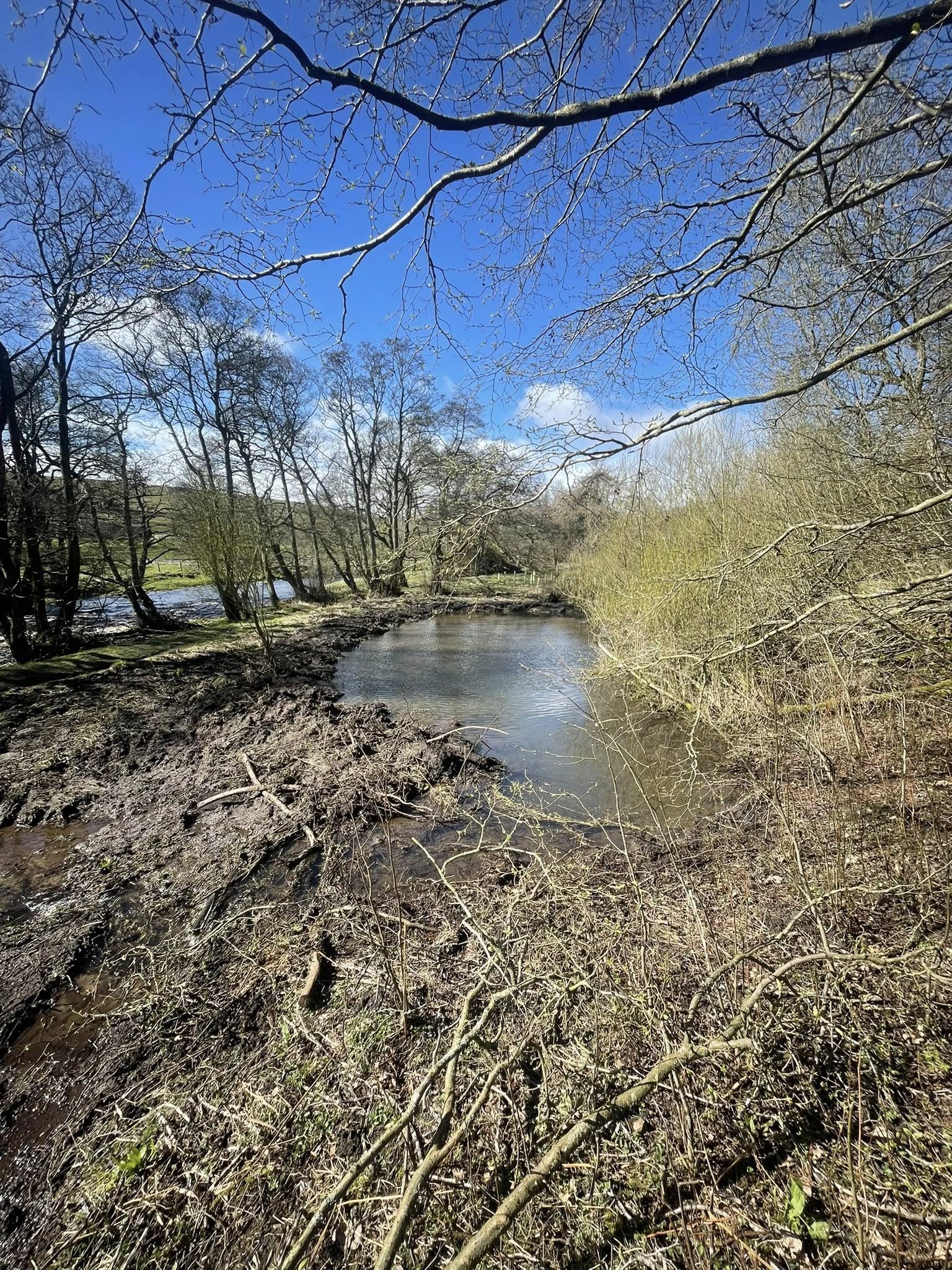
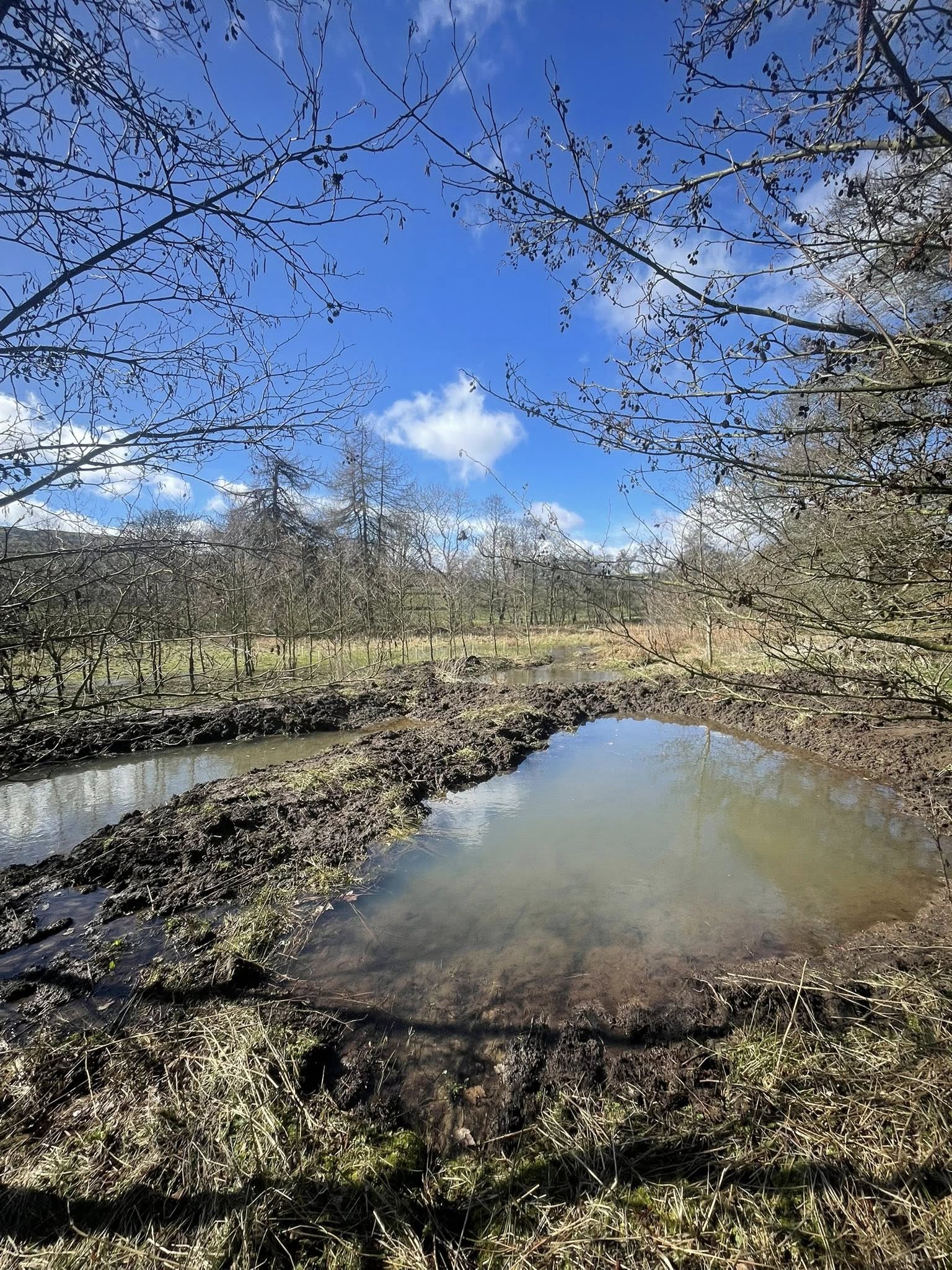
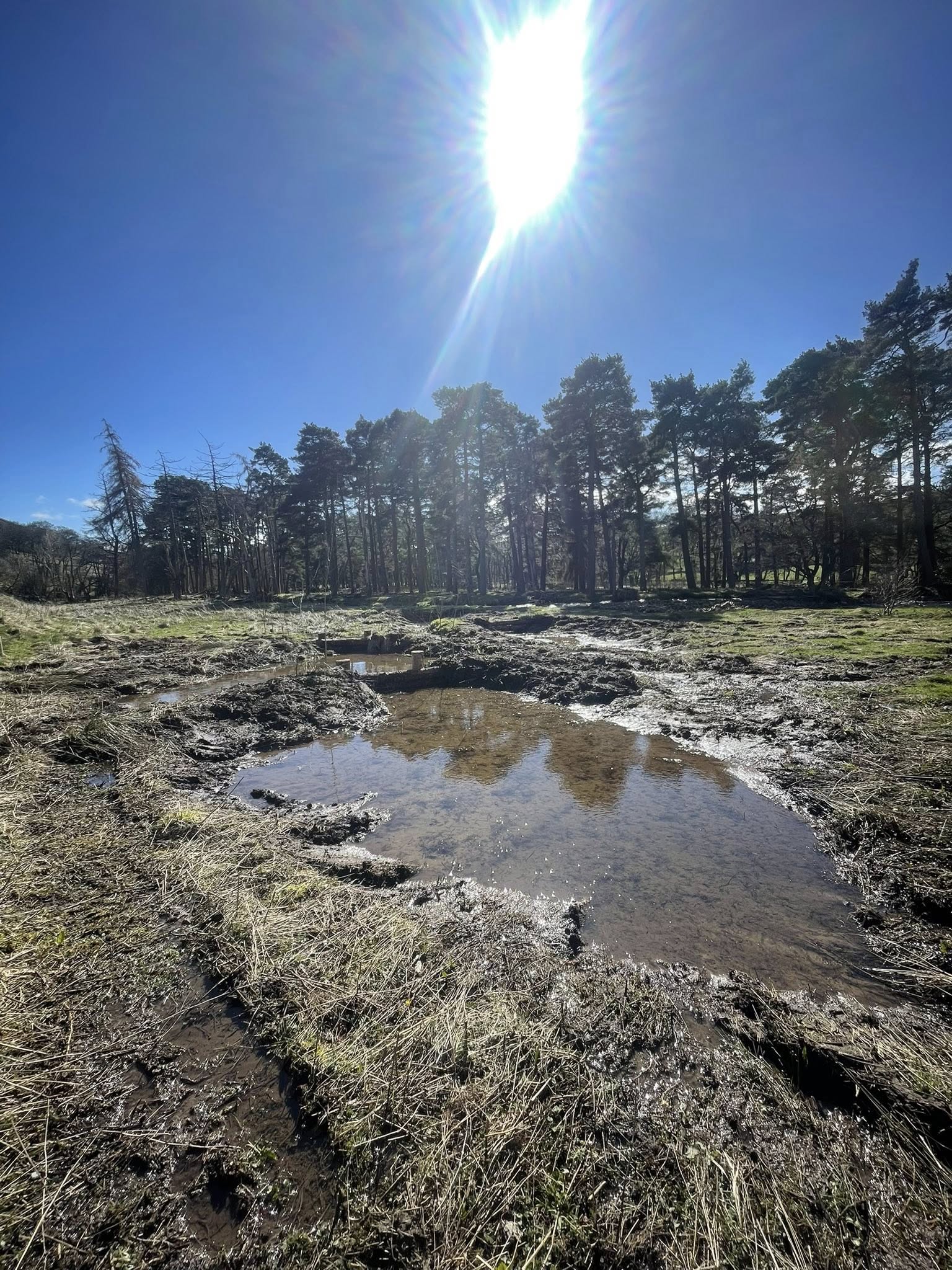
Less than a week after the digger team left site and most of our 18 new scrapes are already full of water; a nice ‘instant’ result in a project that’s otherwise characterised by slow, incremental change across a number of years.
This is our second round of Natural Flood Management interventions designed to slow the flow of water through the valley; this time guided by the team at Ousewem in collaboration with the Yorkshire Dales Rivers Trust.
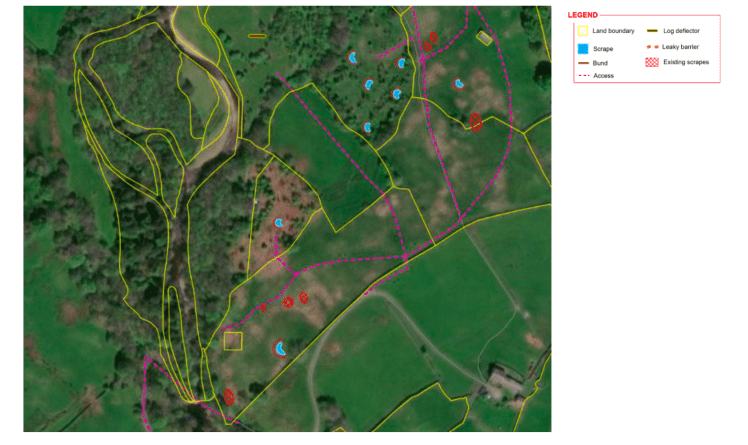
Example of mapped NFM intervention design above Castle Bridge
Additional locations were identified across the site for a combination of scrapes, leaky barriers and log deflectors, all of which help to collect and hold back rainwater, store surface run-off from seasonal tributaries, and create additional habitat for aquatic invertebrates; as well as providing new feeding grounds for other wildlife.
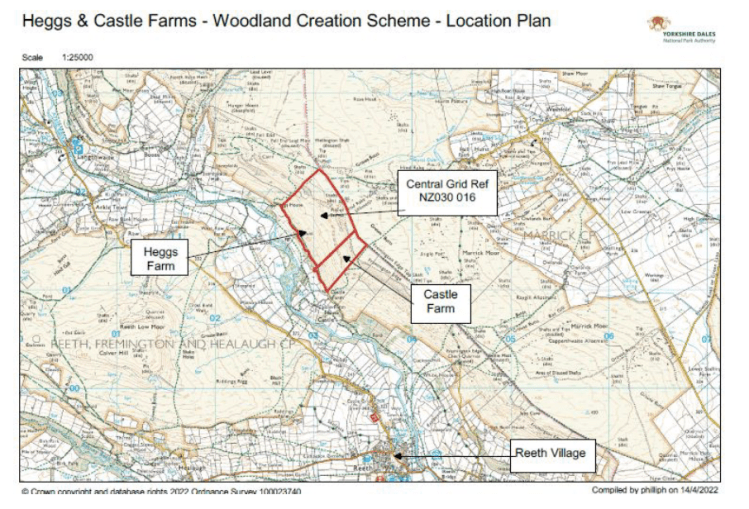
All of these complement our existing interventions (marked in red on the map above).
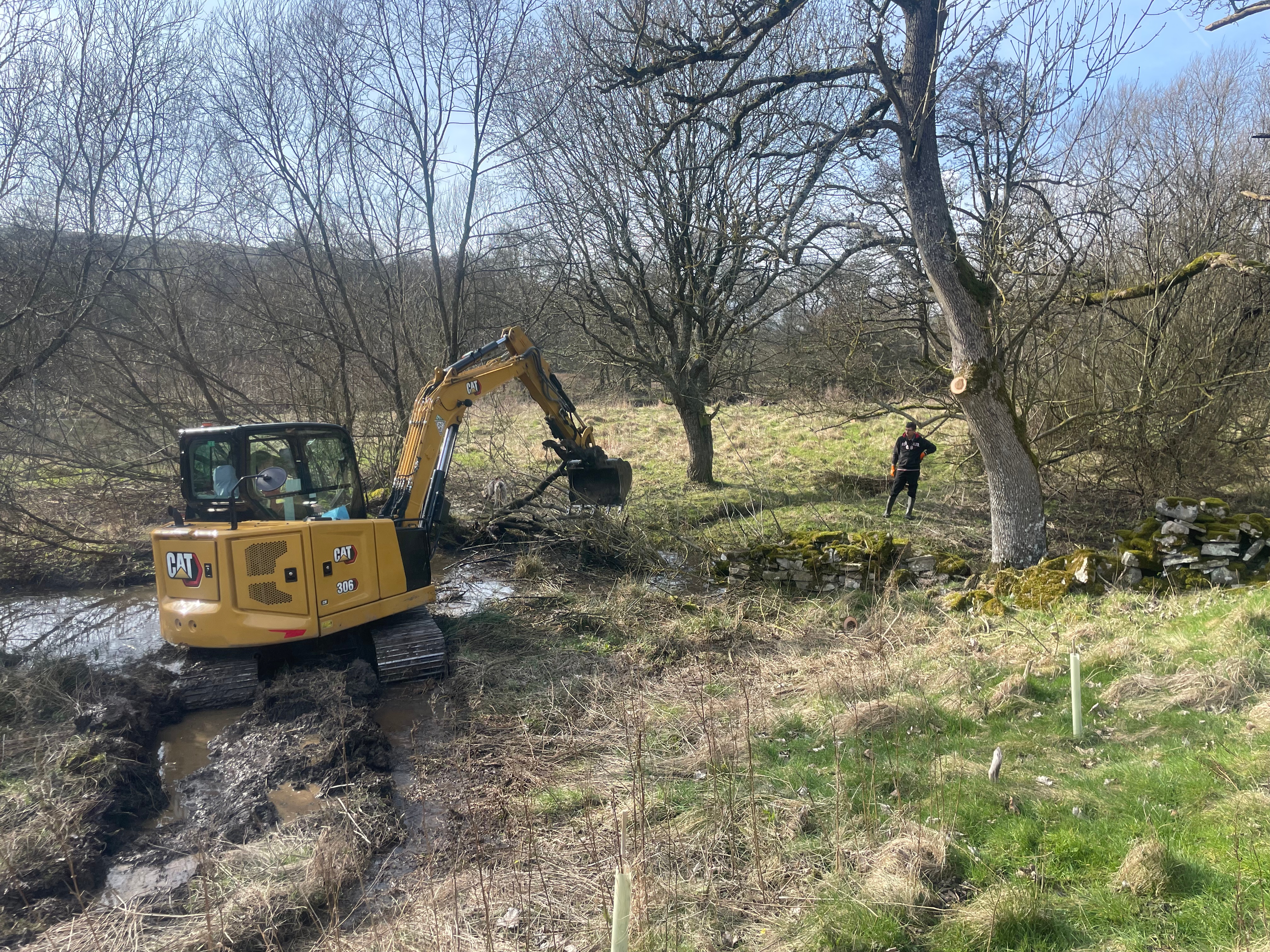
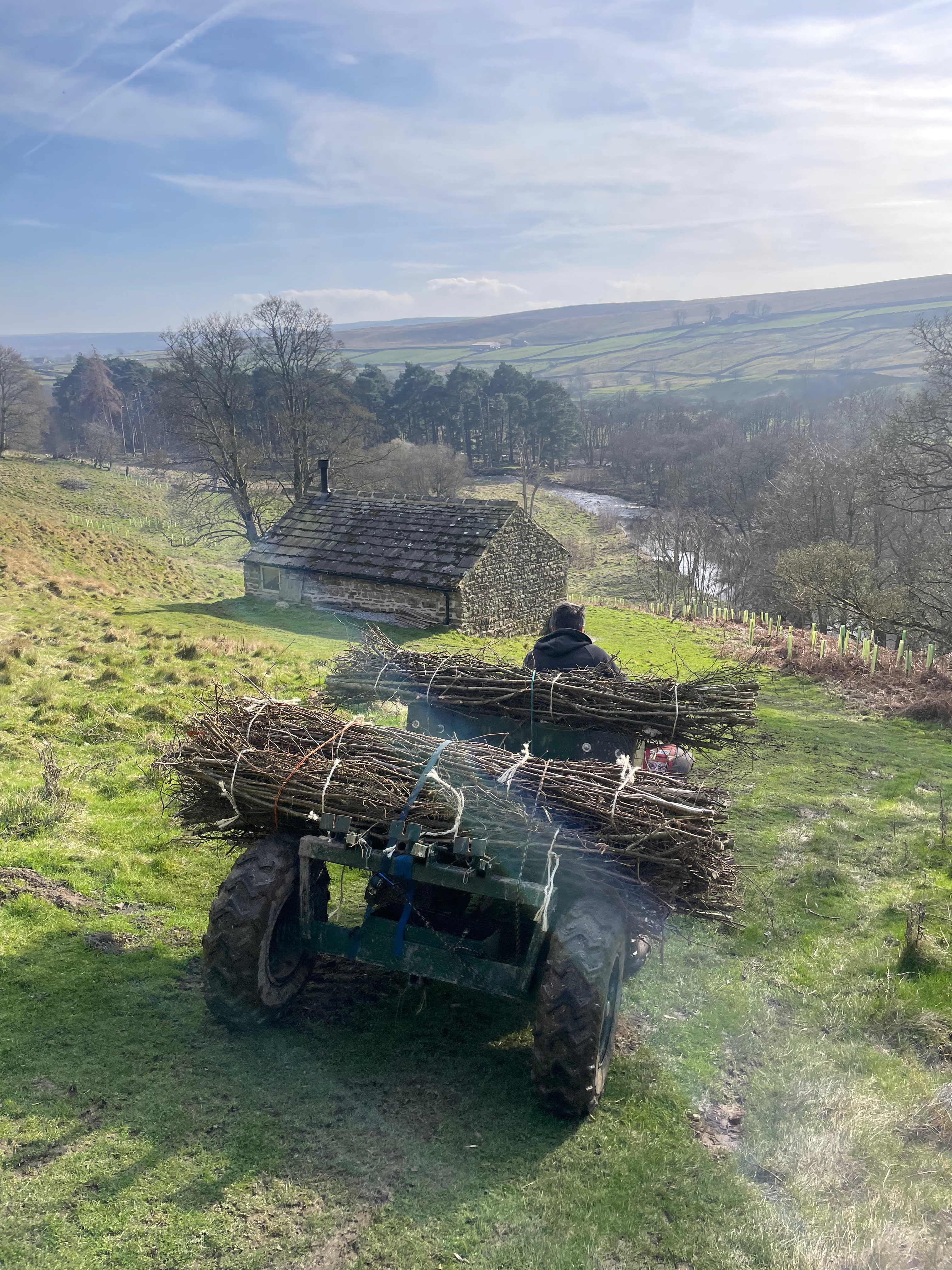
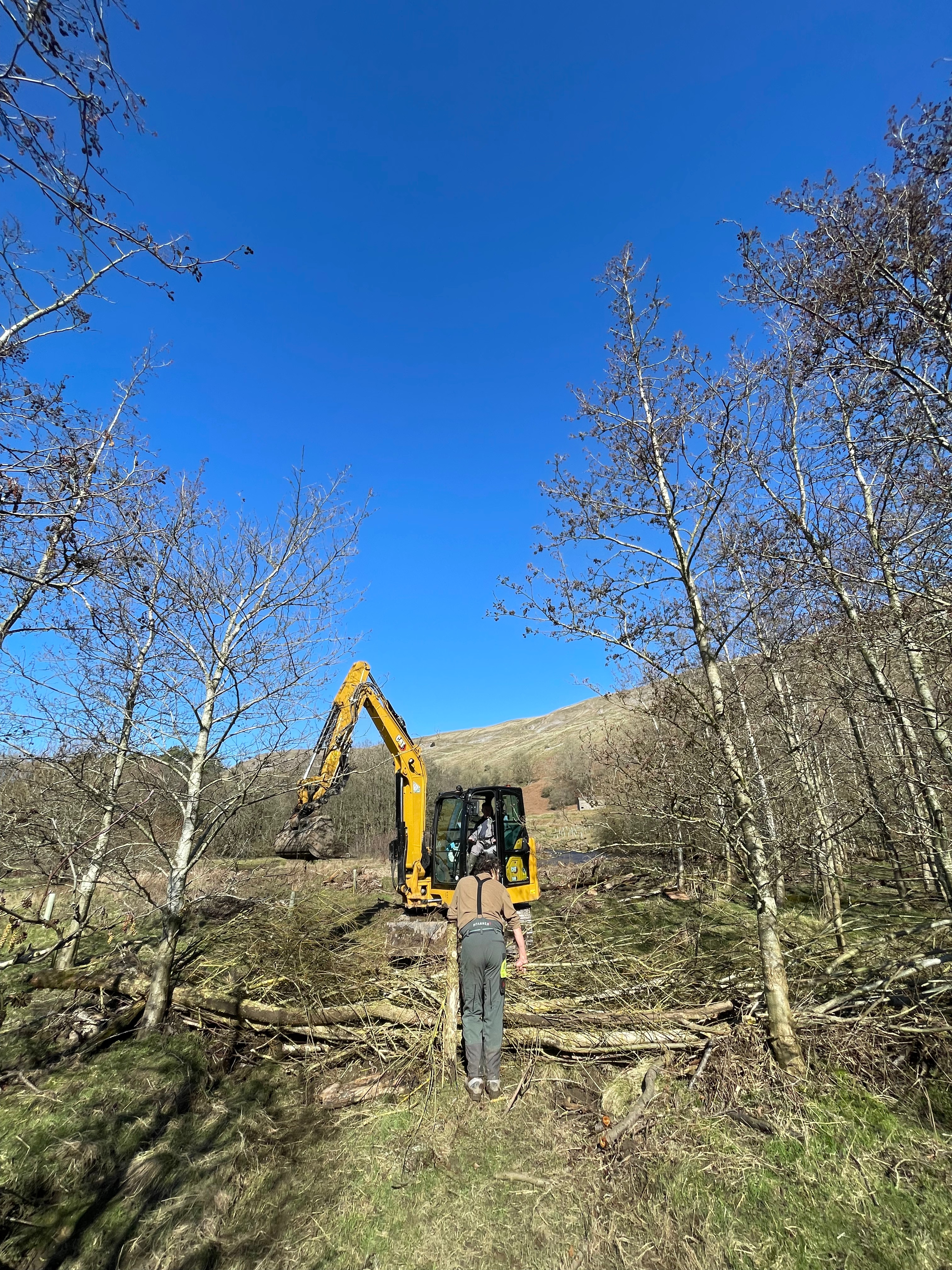
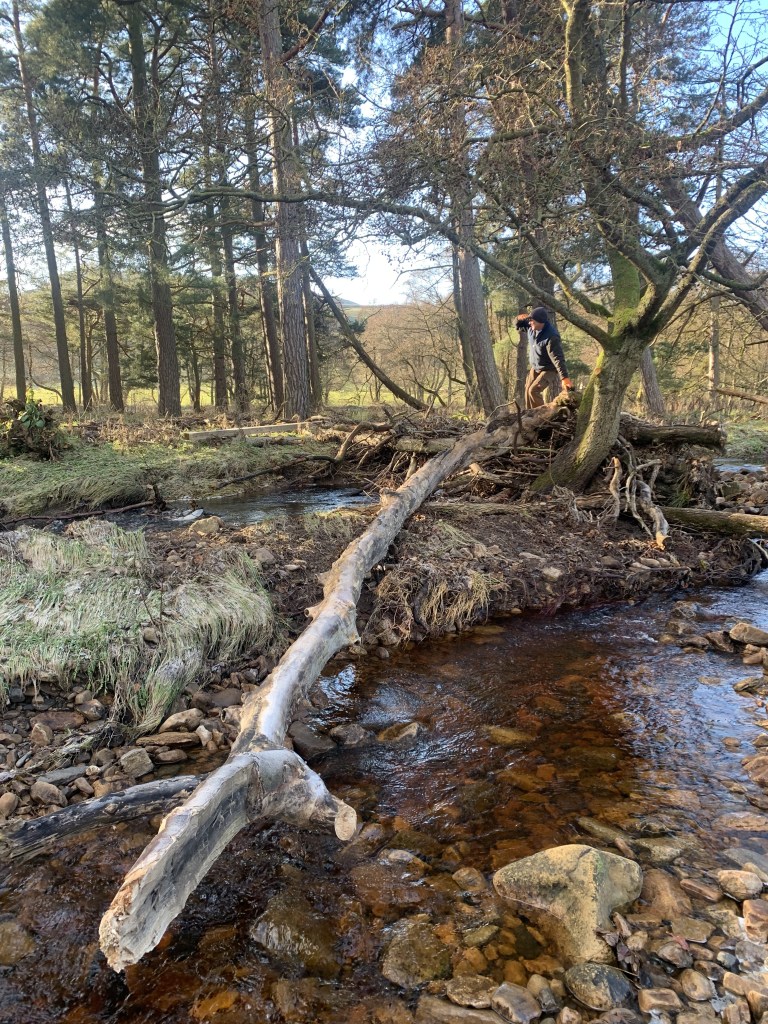
A digger was used to create the scrapes and bunds (raised edges); we used locally sourced larch posts for the log deflectors, and leaky barriers were created from coppiced brash bundles as well as willow harvested on site.
Finally, we planted willow cuttings at the edge of scrapes in a few test locations; and if the rabbits don’t make off with them, we will soon be adding more!
Many of the scrapes had filled up a day after being created, others took a little longer. In either case, they’re working!
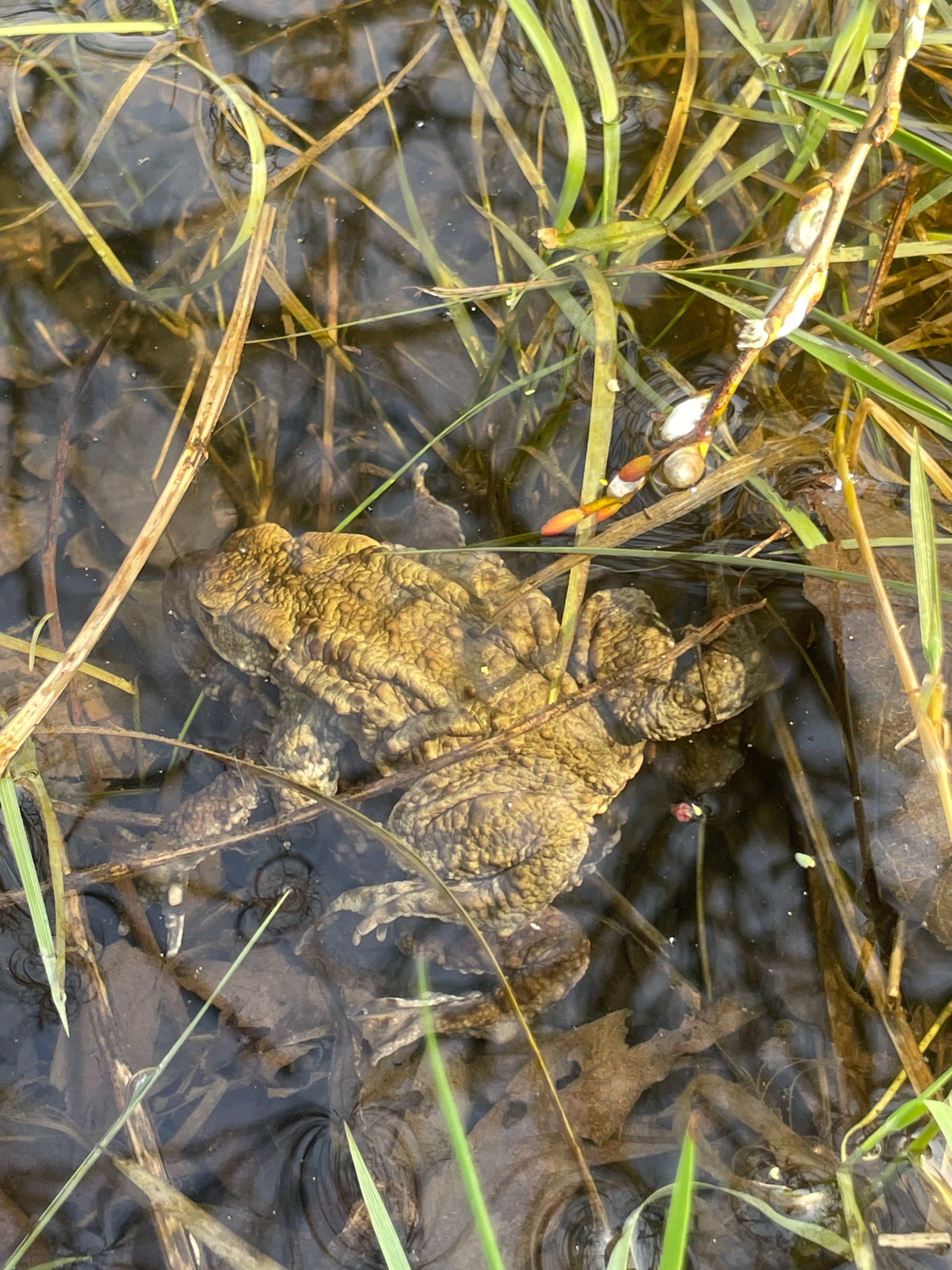
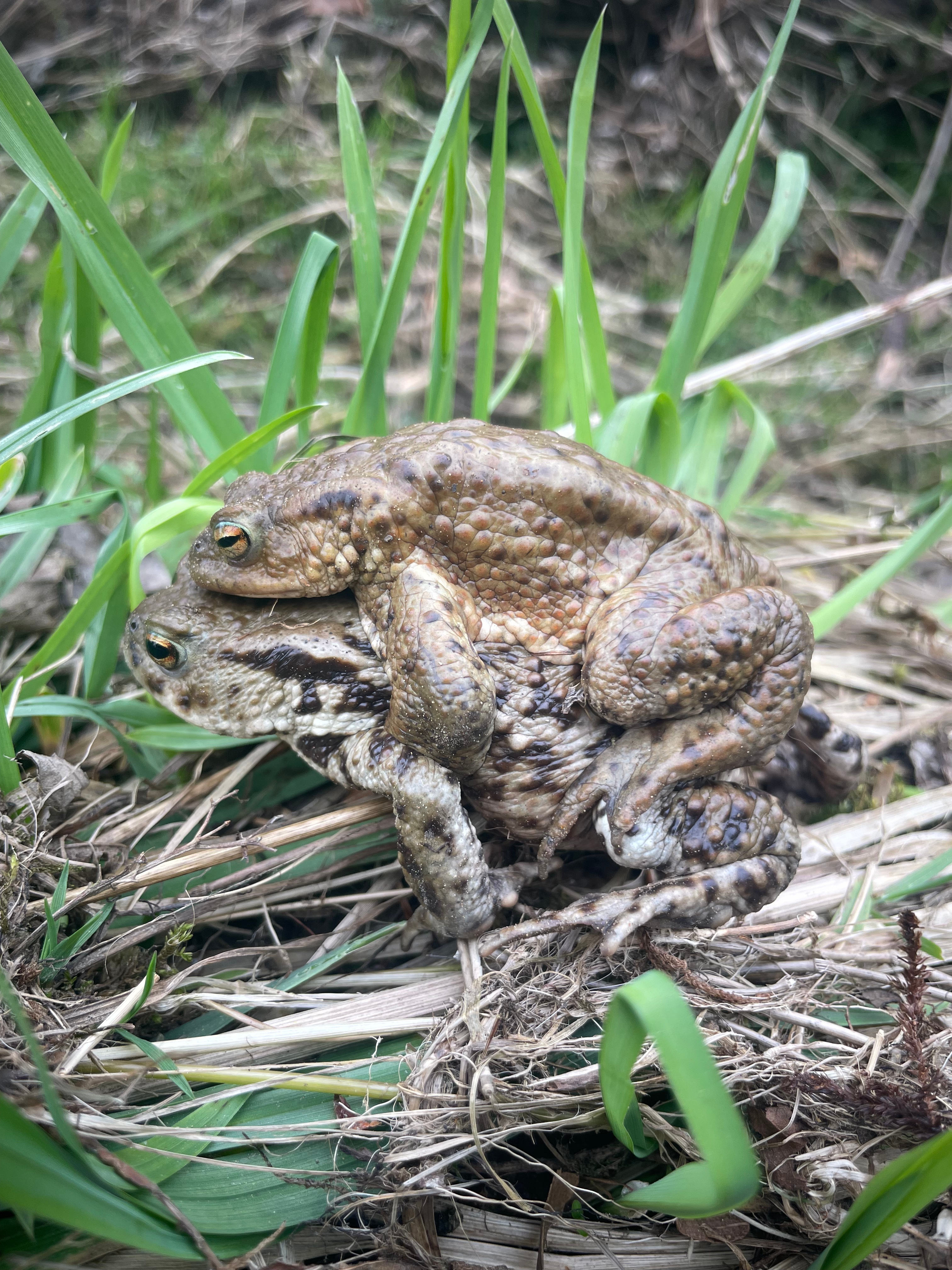
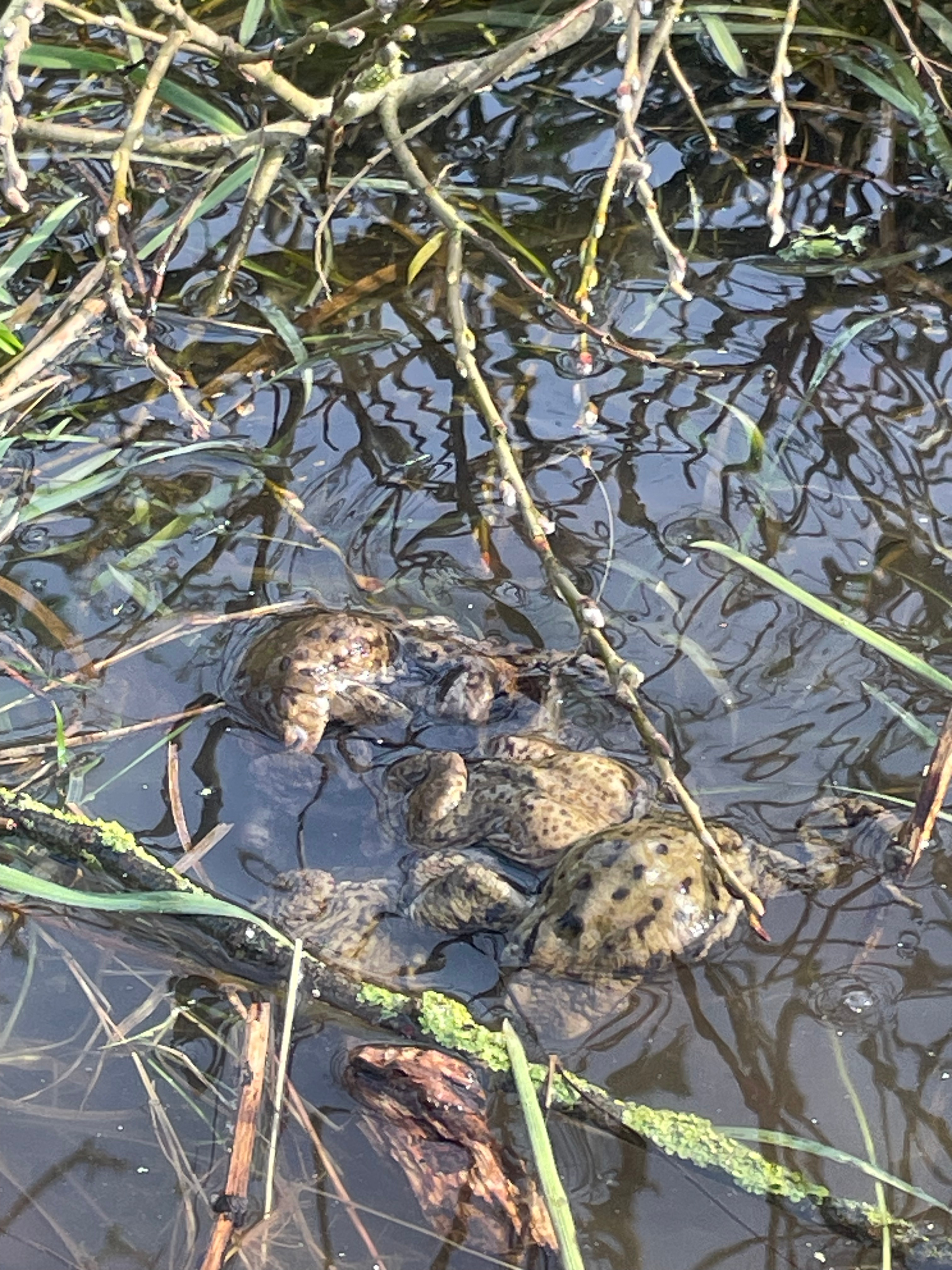
European Toads have already been making the most of an increased choice of wetland areas on site, and as the sediment settles and the vegetation starts to take hold, we will be keeping a close eye on what and who else moves in!
Many thanks to Pete Iveson, our very talented digger driver, and to the team at Ousewem for funding the works.
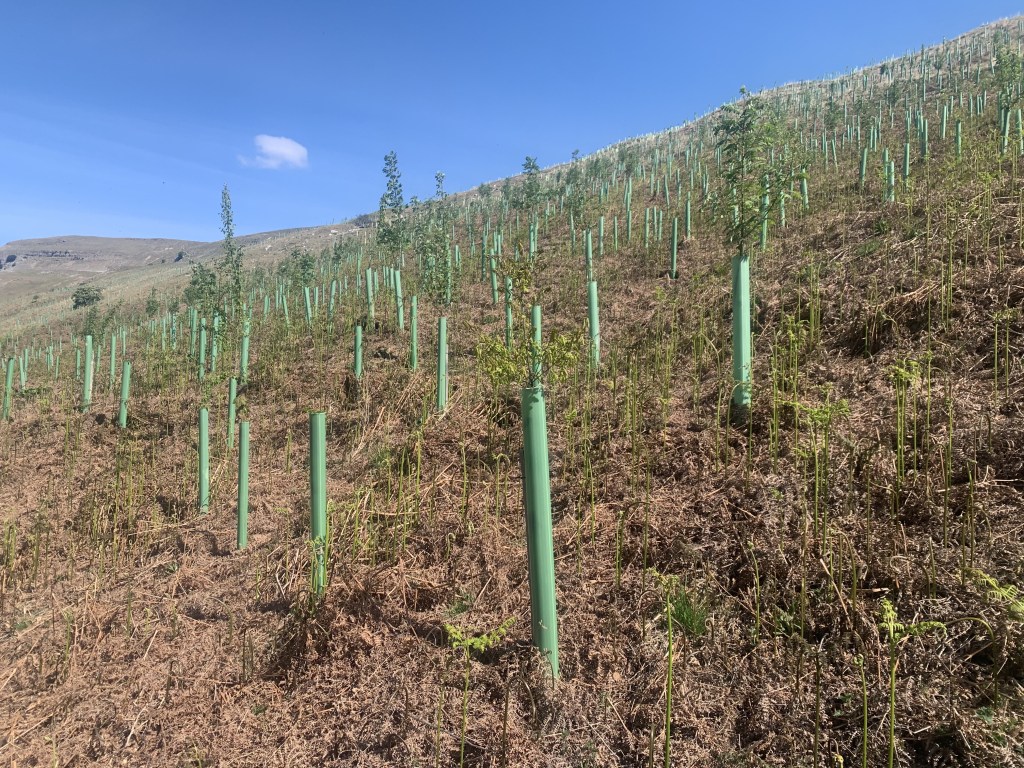
View from the bridleway which passes along the southern perimeter of our 30ha woodland creation.
This was just one of the whispered objections to our Woodland Trust-funded woodland creation on Fremington Edge. But heyho, we did it anyway. And what an uplifting sight it is at this time of year (in our opinion anyway).
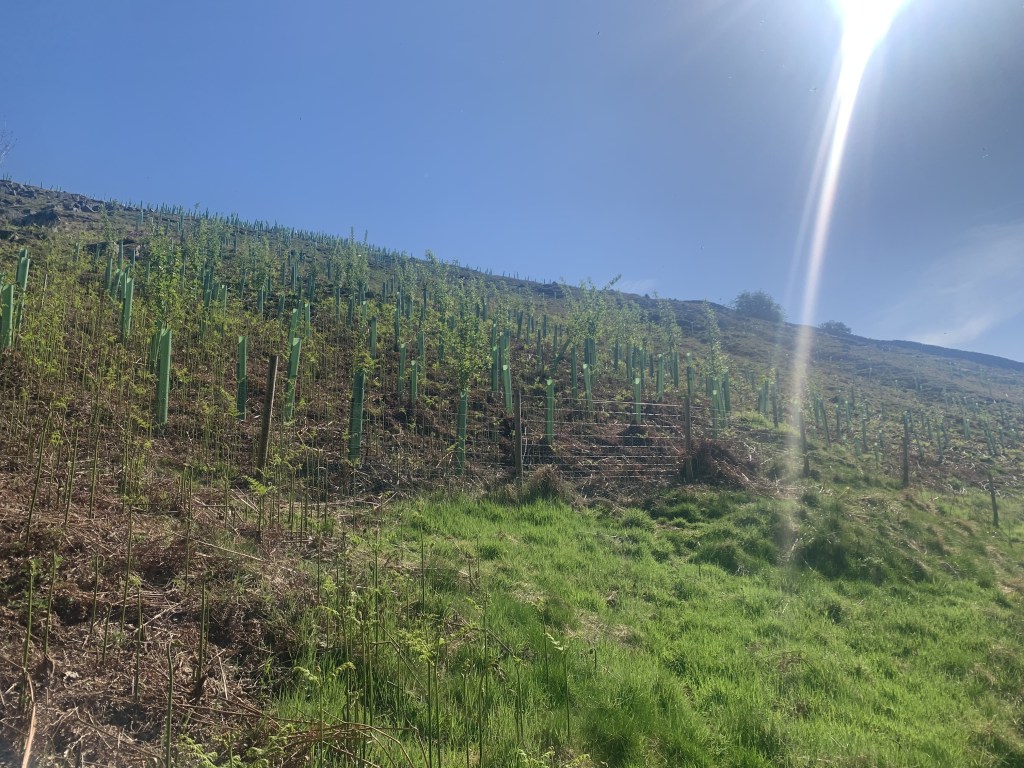
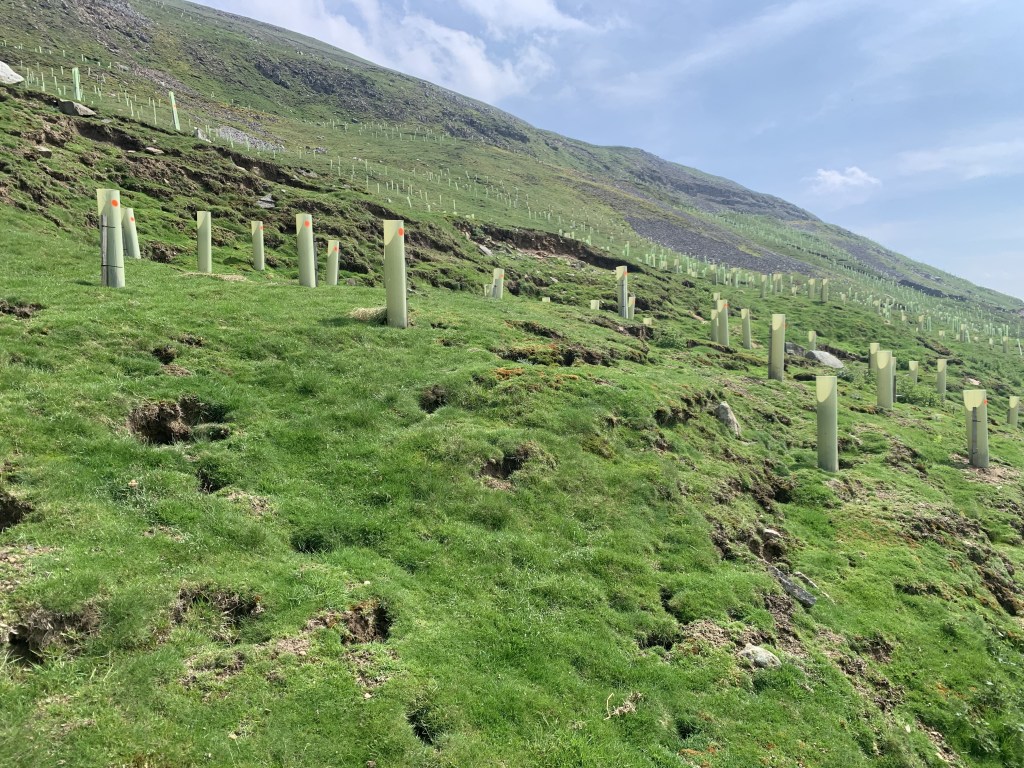
When the trees are in the leaf but the bracken is yet to come up, you can really appreciate how this sea of tree tubes is slowly transforming into woodland on its own terms—with some of the established saplings now towering 3-4m tall.
Planted in the winter of 2022/23, this is the first spring that saplings have emerged from their tubes in great number.
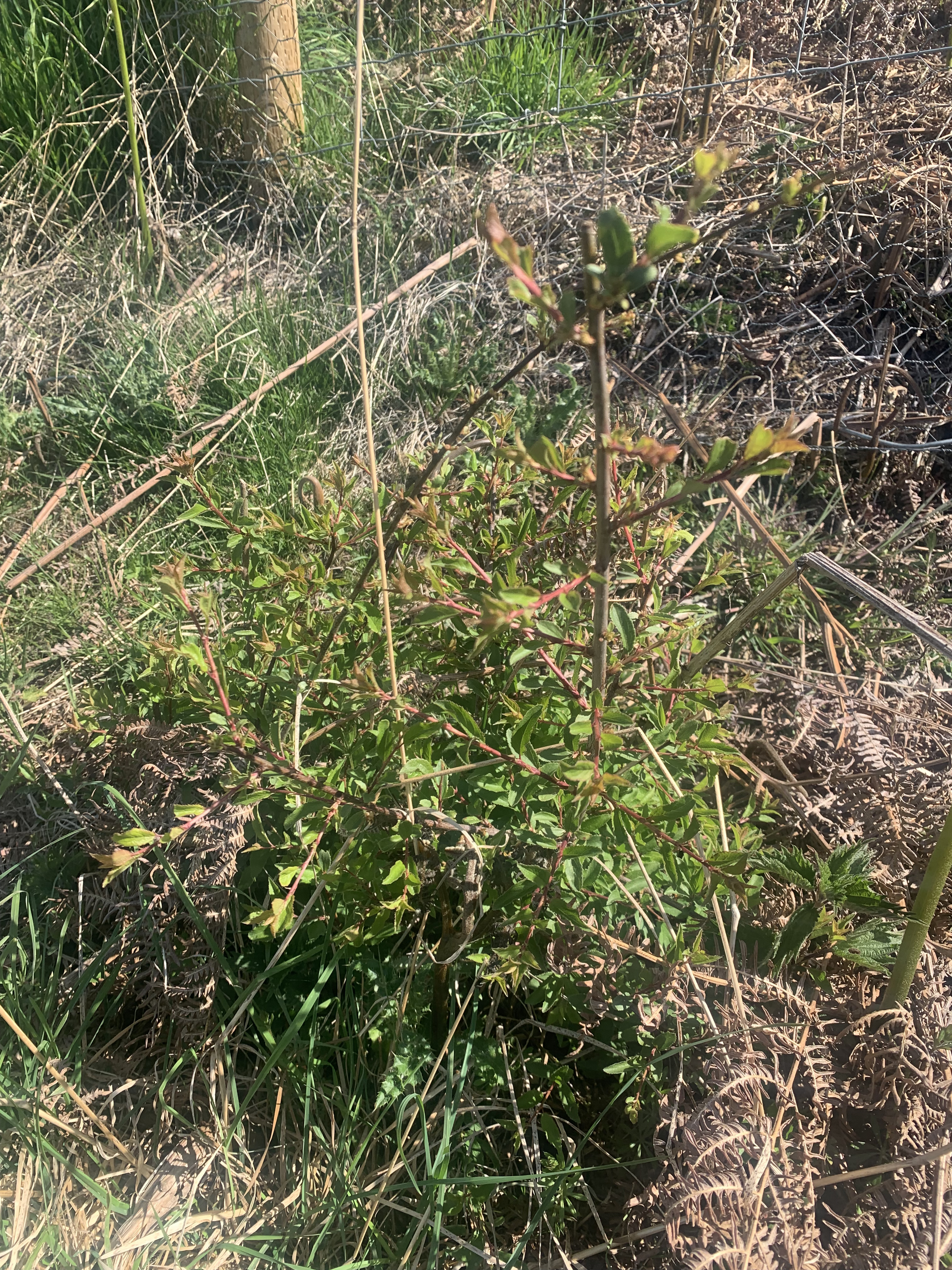
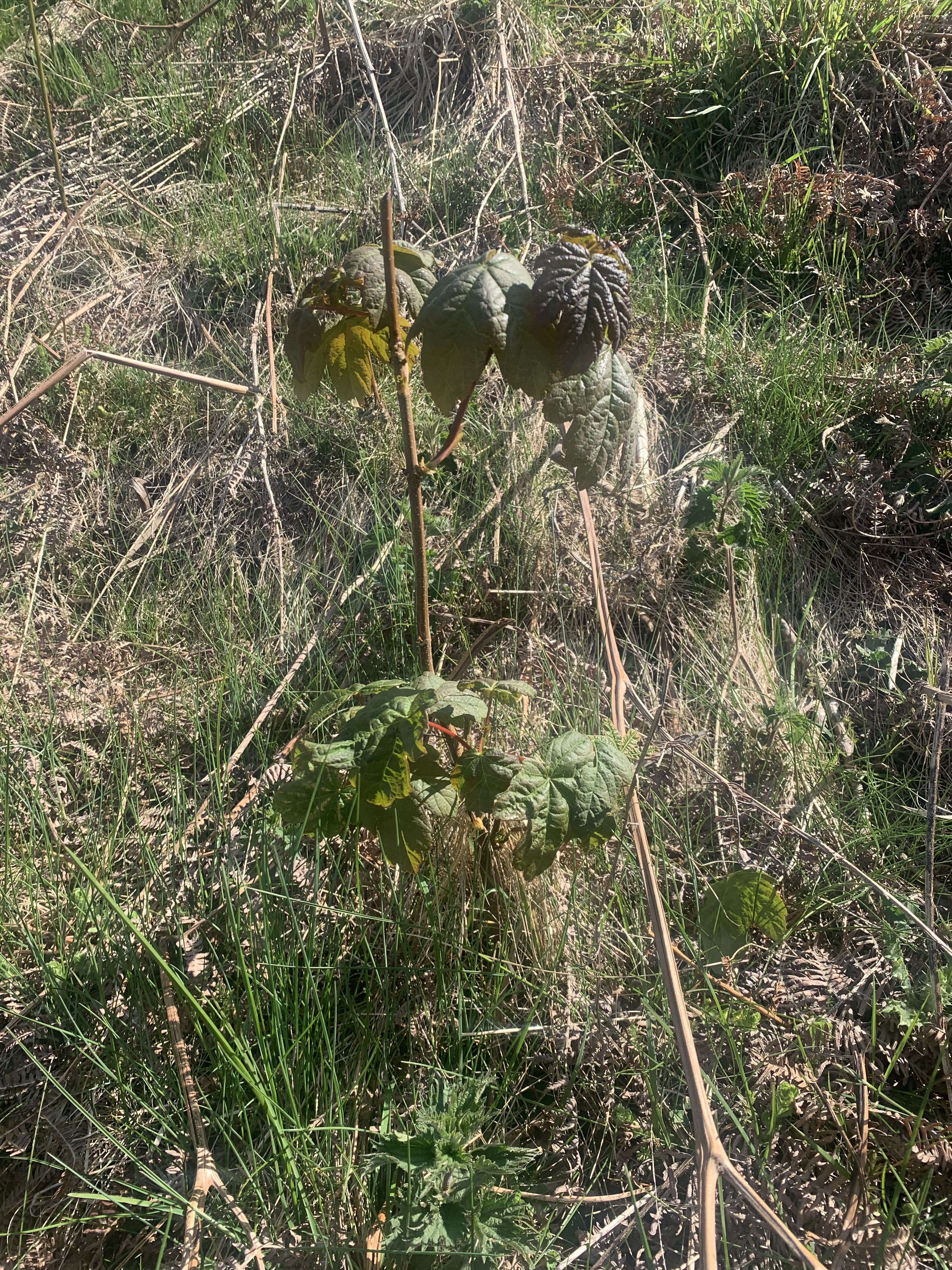
Pockets of natural regen are also springing up. Is this the result of the new seed source, the absence of stock, or our ongoing rabbit control efforts? We’ve no idea but we’re very pleased to see it.
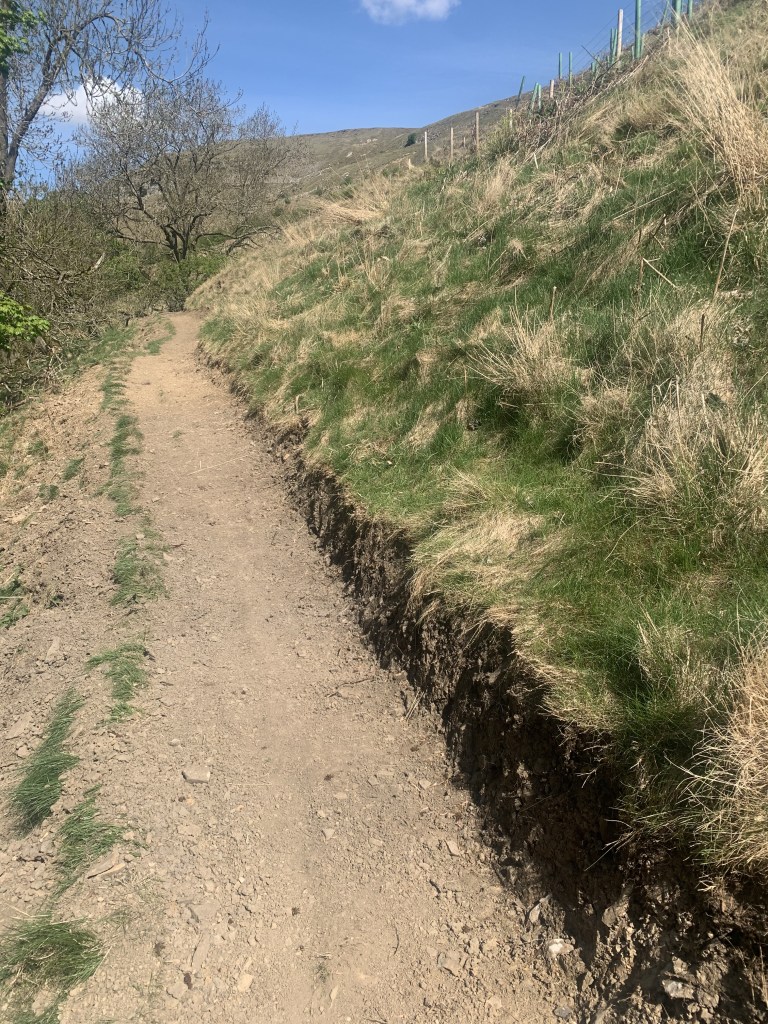
The walk/cycle along the southern perimeter of the plantation has been made a little easier too thanks to the ongoing efforts of YDNPA volunteers who are improving the bridleway over a series of workdays throughout the summer.
An upgraded section of bridleway, now with space to pass.
And if you feel like staying and soaking in the renaturing vibes for longer, you can. We now have two ReWild spaces bookable year round on CampWild. You can read more about the org and its ethos in a recent Guardian article here (Pine Island look familiar?).
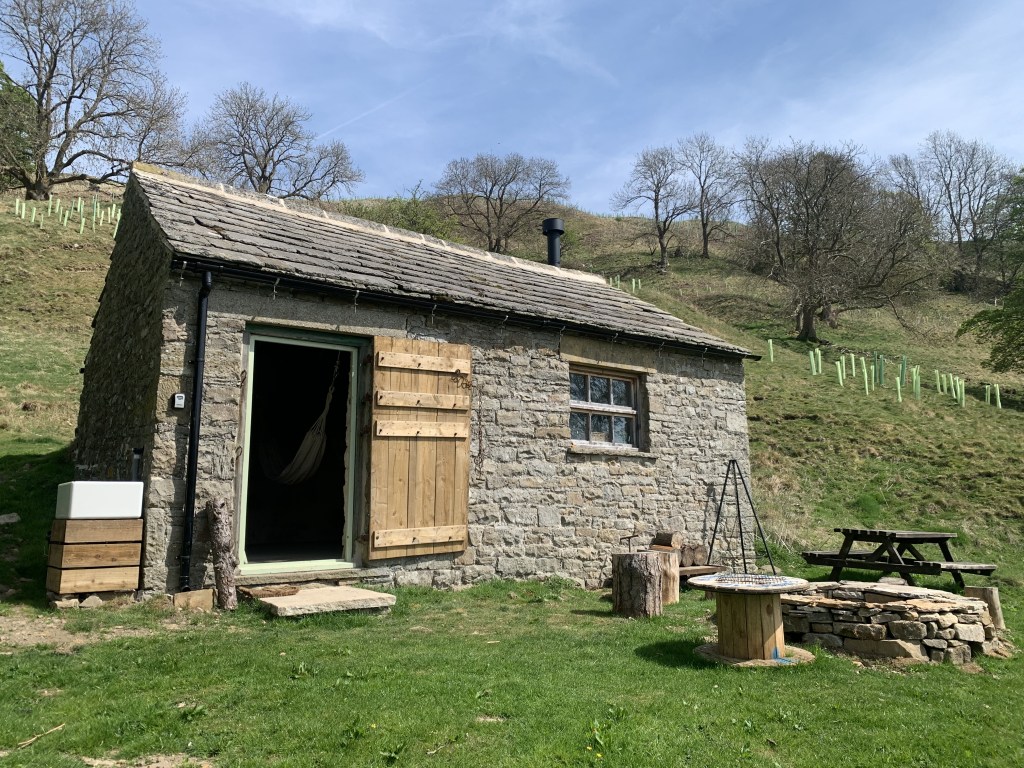
Heggs Basecamp is open 1st May-31st October, comprising exclusive use of the off-grid bothy and adjacent camping area. Stays are £45 per night and operate on a ‘leave as you find it’ basis.
The newly-refurbished Heggs Basecamp is also open for nearly-wild camping up until 31st October. The space includes exclusive use of the off-grid bothy, adjacent camping area with firepit, and compost loos for groups of up to 6 people. More info and photos at heggsfarm.com (and a huge thanks to FIPL for part funding the repair works).
Looking ahead, we have a busy few months, with guided group visits as part of the Swaledale Festival, Richmond Walking & Book Festival, and Yorkshire Rewilding Network Summer Site Visits (tickets for the latter still available). We’ve also teamed up with CampWild for our very first Conservation Campout in June—24 hours of micro conservation activities and talks in the company of likeminded people.
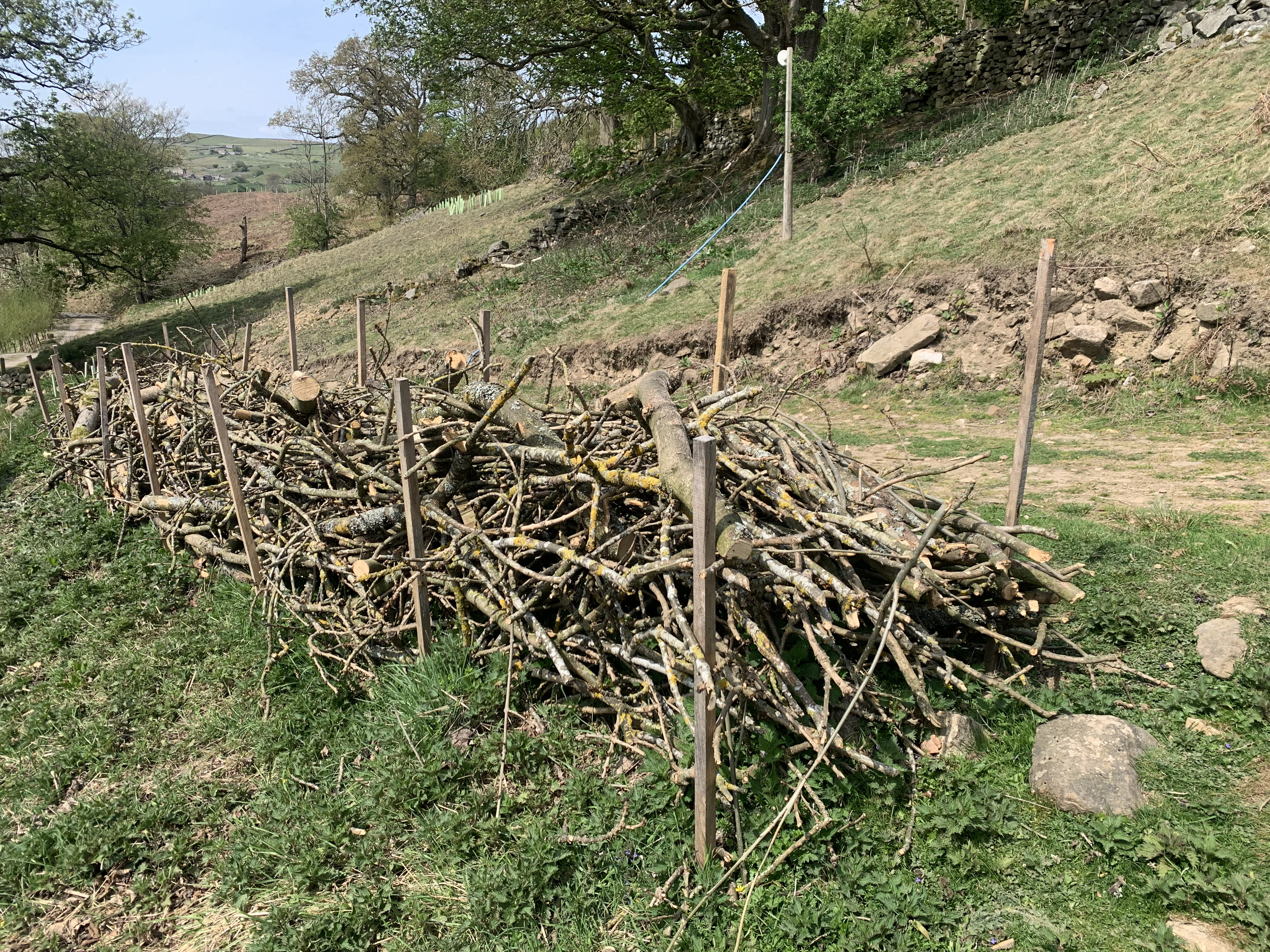
It’s hard to find a positive in the loss of living habitat; but a dead hedge feels like a good place to start.
At one point in time, ash was the boundary tree of choice in the Dales, and unfortunately we’re likely to lose a significant percentage to dieback; an easily transmutable disease affecting an average of 9/10 ash trees.
Many lie on PROW too, putting the onus on landowners to keep a careful eye on the health of their trees, and take action if or when it deteriorates to a ‘dangerous’ level. (Read the Yorkshire Dales National Park position statement here).
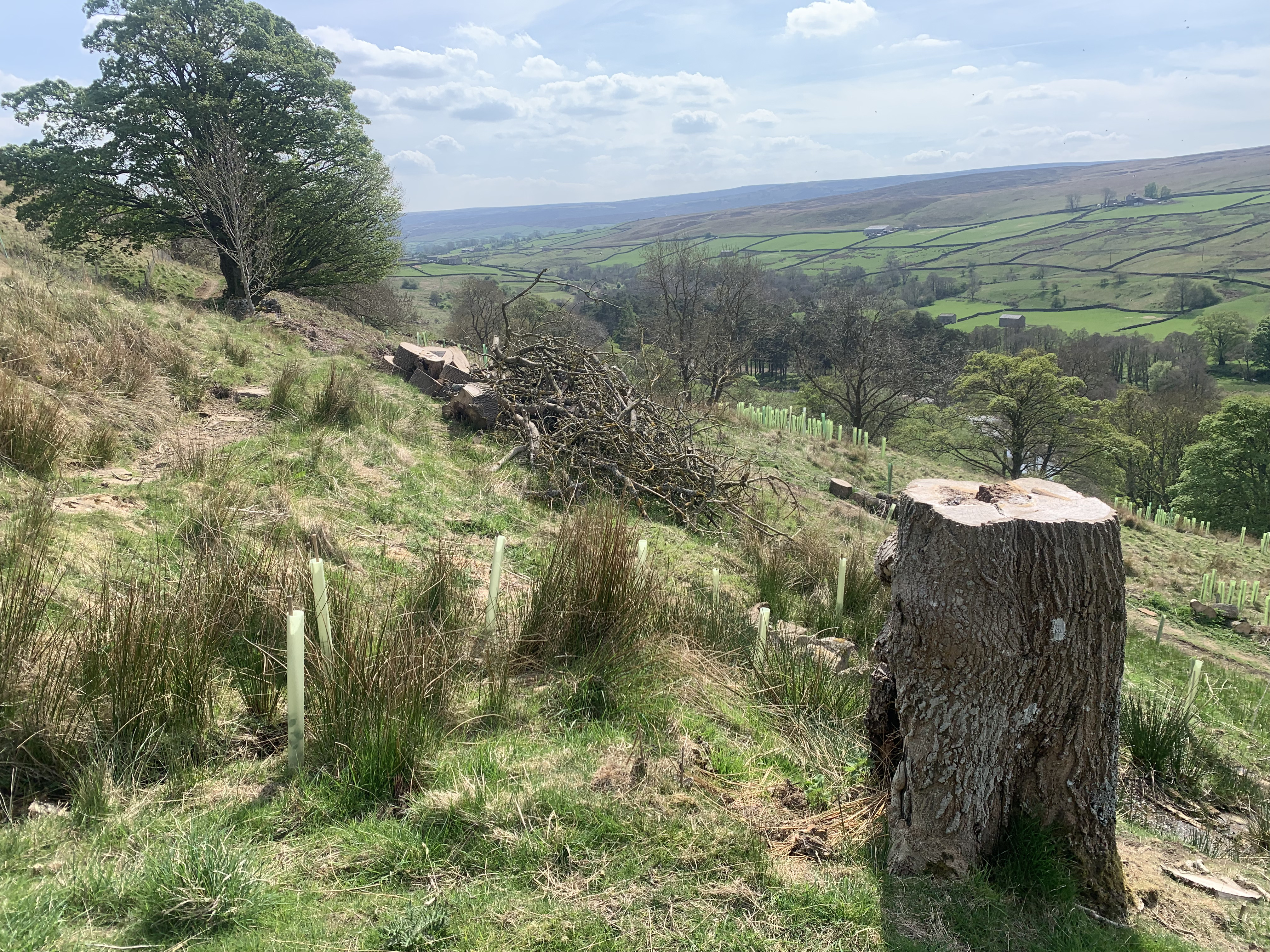
Ash tree in the background shows no current signs of dieback; ash tree in the foreground was in a critical condition. Pollarding this has taken the weight out of the canopy, reducing the structural hazard.
After a visit from our local Forestry Commission chap this winter, we agreed that works were needed on 6 ash trees lying alongside the footpaths and bridleway that pass through the cluster.
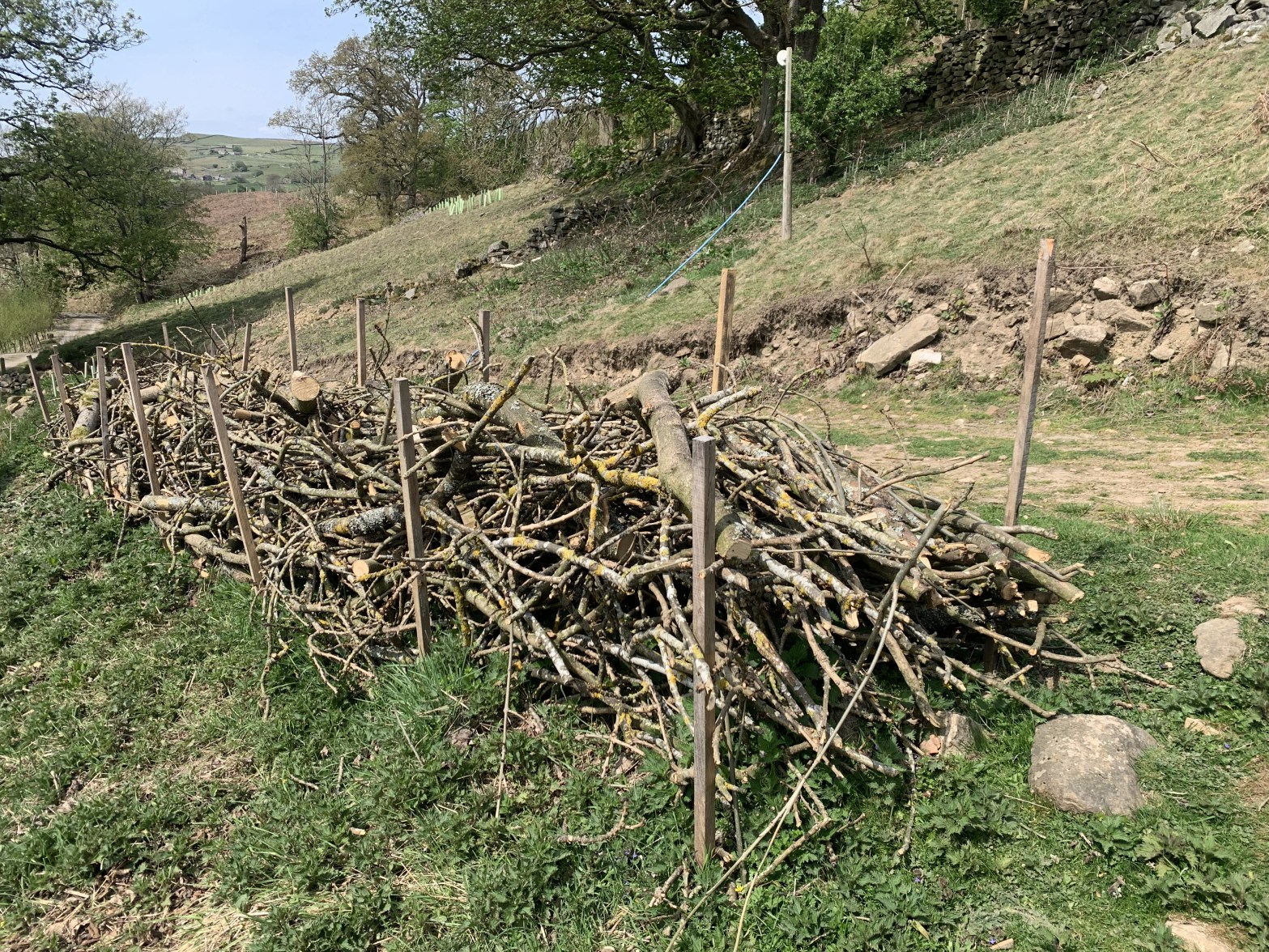
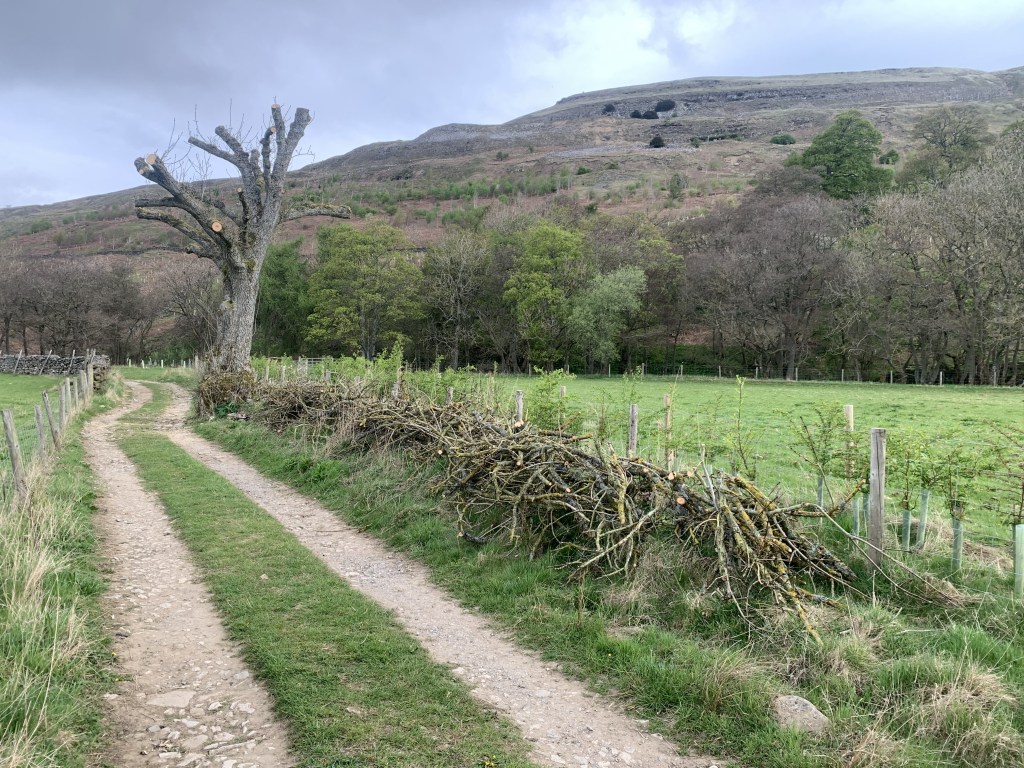
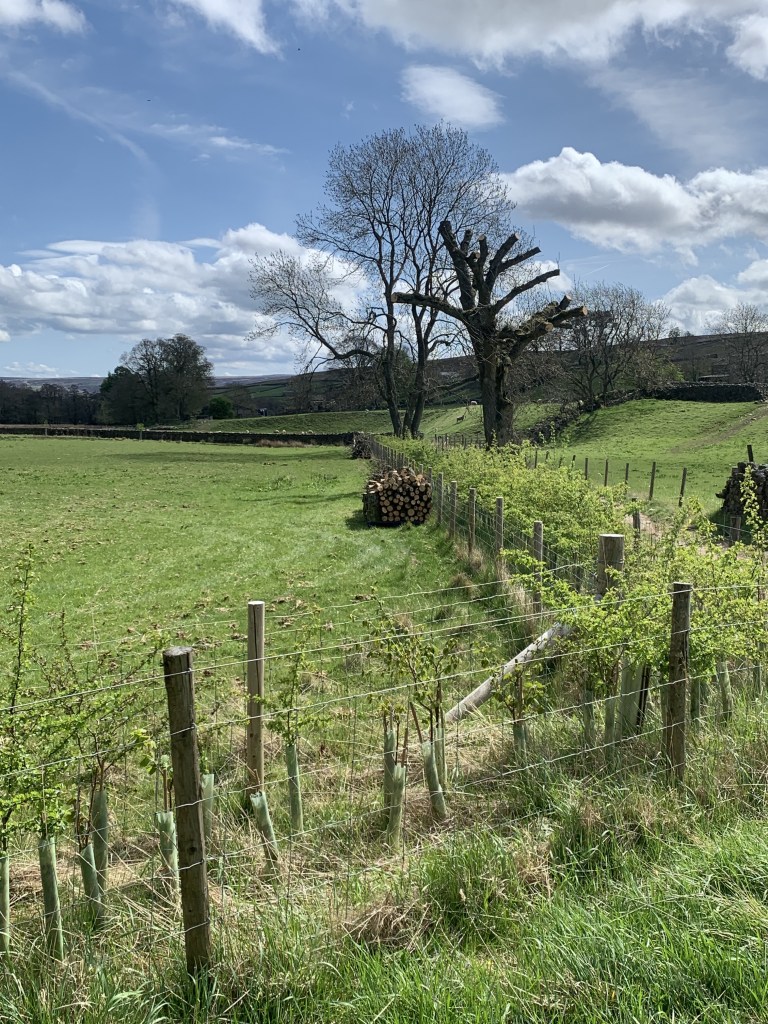
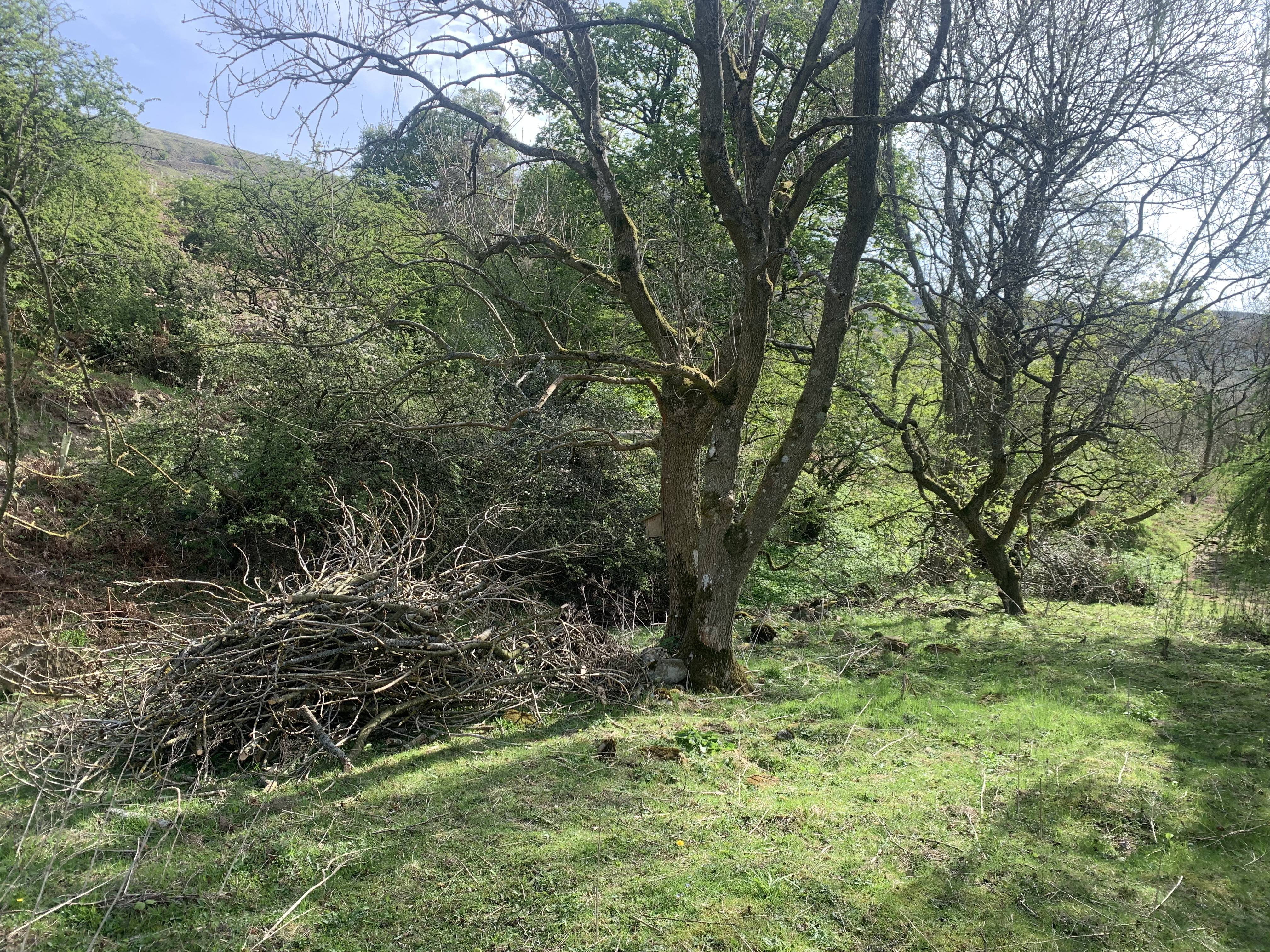
Where safe to do so, we decided to leave a large part of the trunk intact (which will hopefully stay standing for another decade or more); and to create brash piles or ‘dead hedges‘ nearby with all materials too small for firewood rounds. These provide hiding places and nesting habitats for all sorts of creatures, as well as food for insects.
It’s never easy to lose living habitat. However, we feel a little bit better knowing that we’ve done what we can to keep intervention to a minimum, and mitigate the loss.
There’s good news too that many of our ash are still faring well, with some showing no signs of dieback at all. Long may that continue!
Many thanks to local arborist Rob Foster, for helping us to devise an action plan and work sensitively in the best interests of each tree.
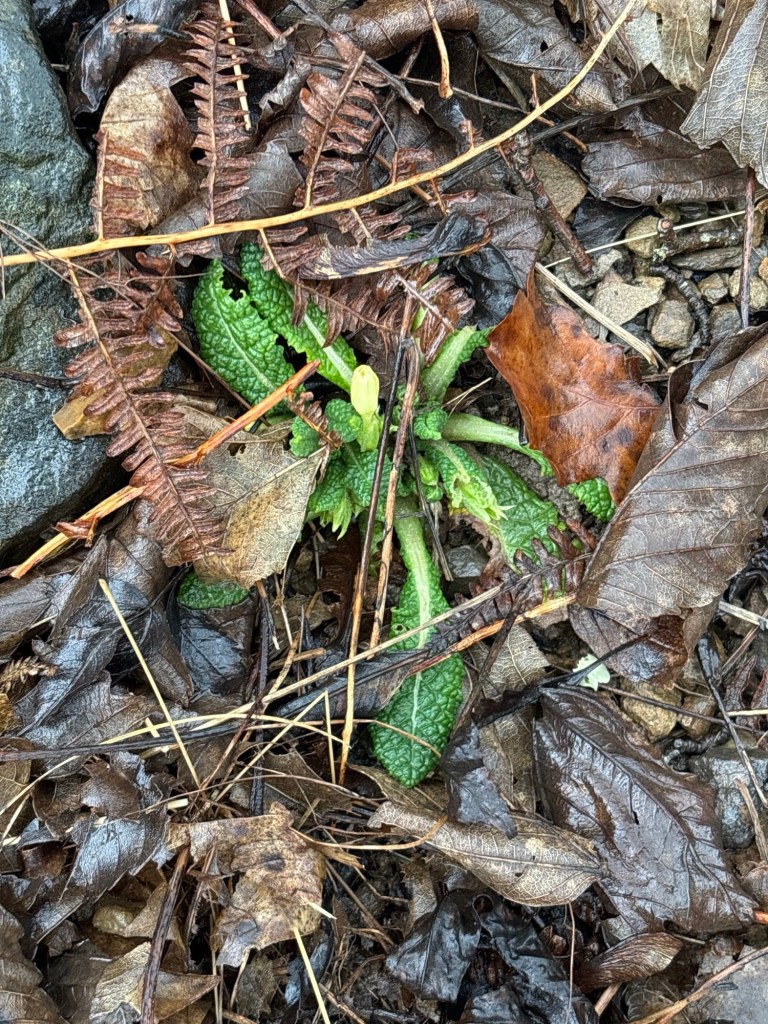
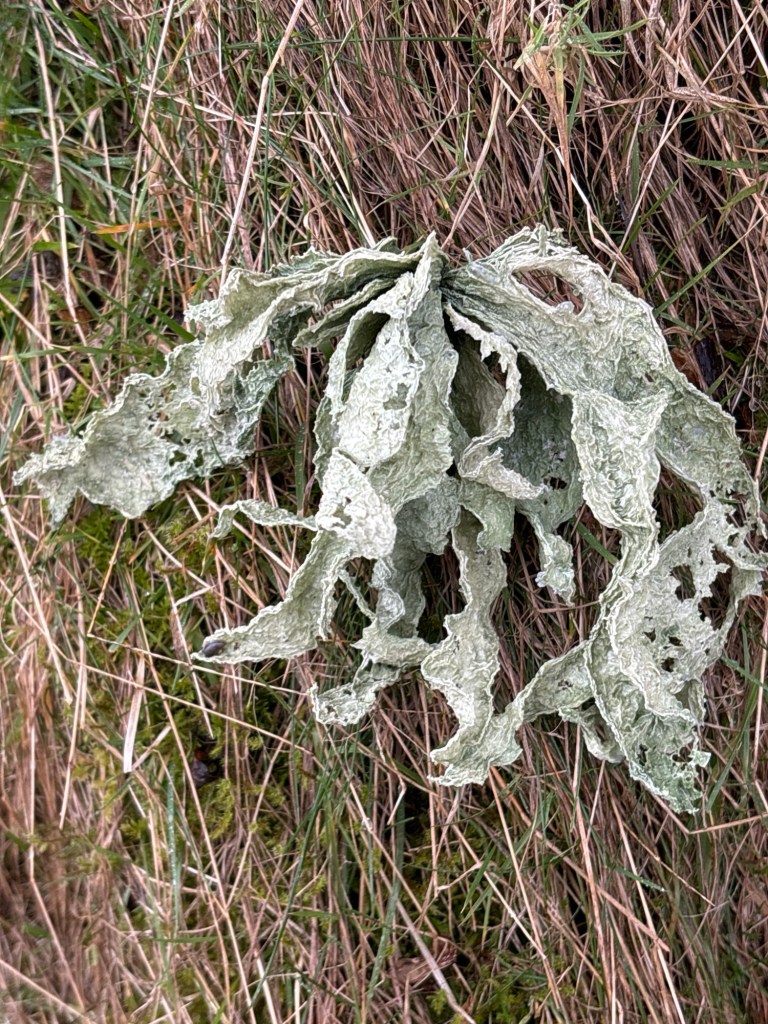
A meeting on The Cluster with DEFRA earlier today about the uplands, yielded the first Primrose of the year (along with some rather fine Cartilage lichen).
Greetings from a chilly but bright Swaledale. It’s been some time, but I felt an update on what has been happening recently may not be the worst idea.
We have had quite a few meetings to move forward our NFM (Natural Flood Management) work on the Cluster. We have written about NFM before and have had a few scrapes dug and most are doing what they are supposed to do. We’ve built a few leaky dams and most are doing what they’re supposed to do. However we are ready to really expand our NFM efforts, hence these recent meetings.
We are working with Ousewem https://www.ousewem.co.uk to design and implement these further measures. Ousewem is a local partnership project funded by the government, working with farmers and landowners within the North Yorkshire’s Swale, Ure, Nidd and Ouse (SUNO) catchments to actively implement nature-based solutions (NbS) including natural flood management (NFM) to help manage flood risk. They have identified Arkengarthdale as a priority area for this and our Cluster is right in the middle of it!
We are not the only folk to be involved and there is good positive interest from other land owners/managers in the area. Not only should these efforts benefit in reducing the likelihood of flooding, but they’re also brilliant in helping biodiversity and bio abundance without really affecting the ability to produce food locally.
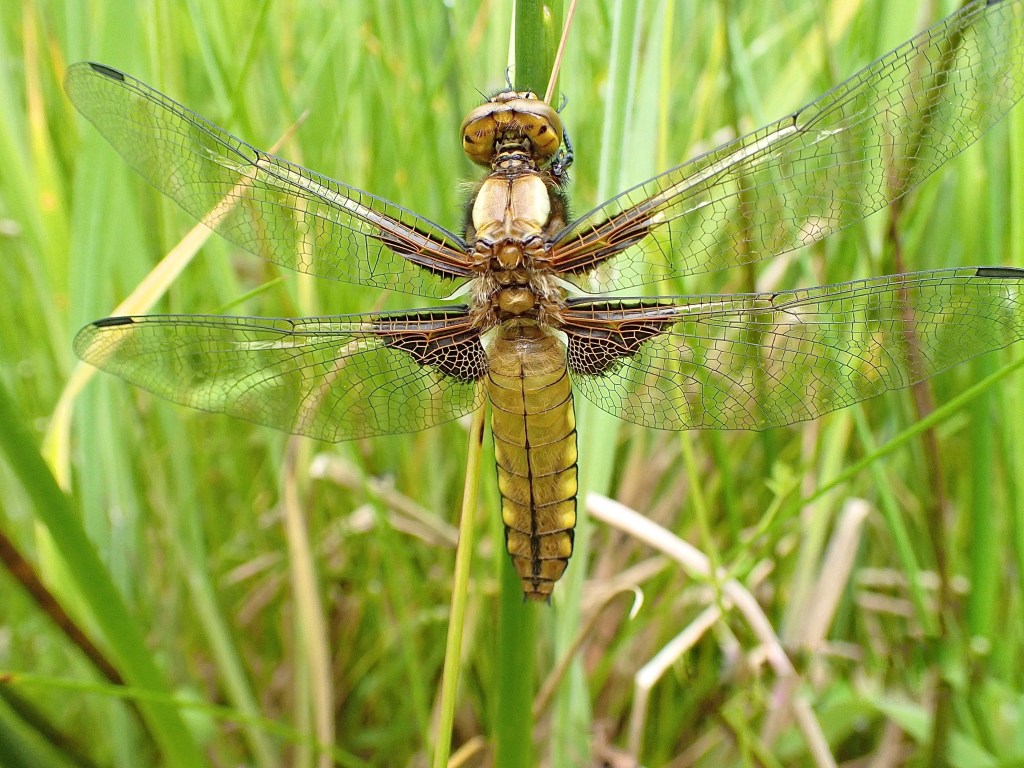
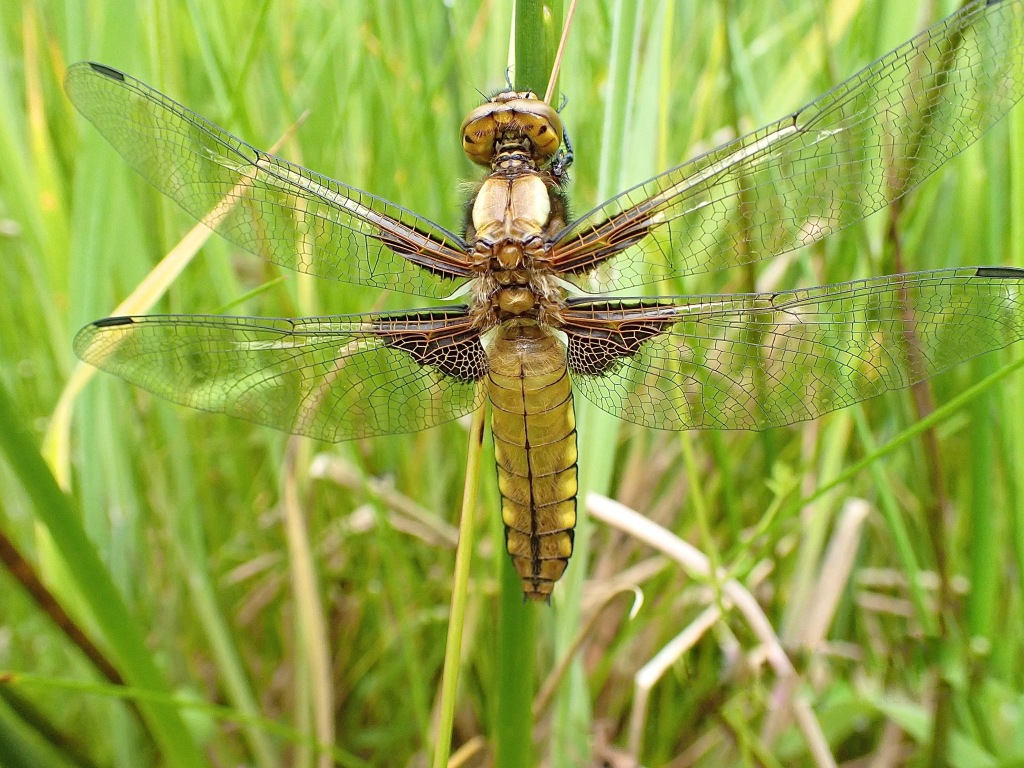
One beastie that benefits from this ‘sort of thing’ is the magnificent Broad-Bodied Chaser, one of which appeared weeks after we dug our first lot of scrapes. It was seen in an area that was seasonally wet previously, but we expanded it and hopefully made it even more valuable.
The freshly emerged Broad-Bodied Chaser
There are some public meetings about Ousewem and the work they do happening shortly in the village. Have a look on the above link for details.
Finally, if you are wondering what the title of this blog is all about, those three individuals all have something in common. Don Bradman was an Australian cricketer, Midge Ure is a musician and A E Houseman was a poet. Their common denominator is very much linked to the broad subject of this article, namely water.
Answer in a day or two in case you haven’t got it!
Since forming in 2019, we’ve focused much of our efforts on woodland, scrub and hedgerow creation, putting each project through a careful consultation and design process, to ensure we’re planting only the most suitable areas, using only the most suitable species mix.
Yes, we love trees, but only in the right place: Our long-term vision is a connected mosaic of healthy habitats, and we’re excited to watch these take shape…
Fremington Edge
Orange spray is used to dot tree tubes in which the sapling has failed. This makes it easier for the crew extracting surplus materials at a later date.
Over the summer, every single one of the 28,700 trees planted on Fremington Edge was hand weeded, re-secured and surveyed. Once totted up, our total losses amounted to 9,433. More than we’d hoped for? Yes. Disaster? Not necessarily…
The drought of June 2023 meant soaring mortality rates at new plantations across the region, and we were actually quite impressed that as many survived—on our dry, exposed, thinly-soiled, upland site—as they did. There are unexpected benefits of the resulting lower density too: More natural-looking open spaces, increased opportunity for a higher biodiversity of ground flora and natural regeneration; and of course, less longer-term woodland maintenance eg thinning out, once the canopy starts to close. We’ve also seen a return in breeding pairs of raptors (including peregrine falcons and kestrel), identified burgeoning new communities of plant life, and captured an array of interesting species via our strategically-positioned wildlife cams. All positive indicators of a blossoming new habitat.
So, maybe the losses are just nature correcting our course? After all, with 19,267 saplings alive and kicking, the future still looks very promising for our two year-old woodland.
Lower Slopes
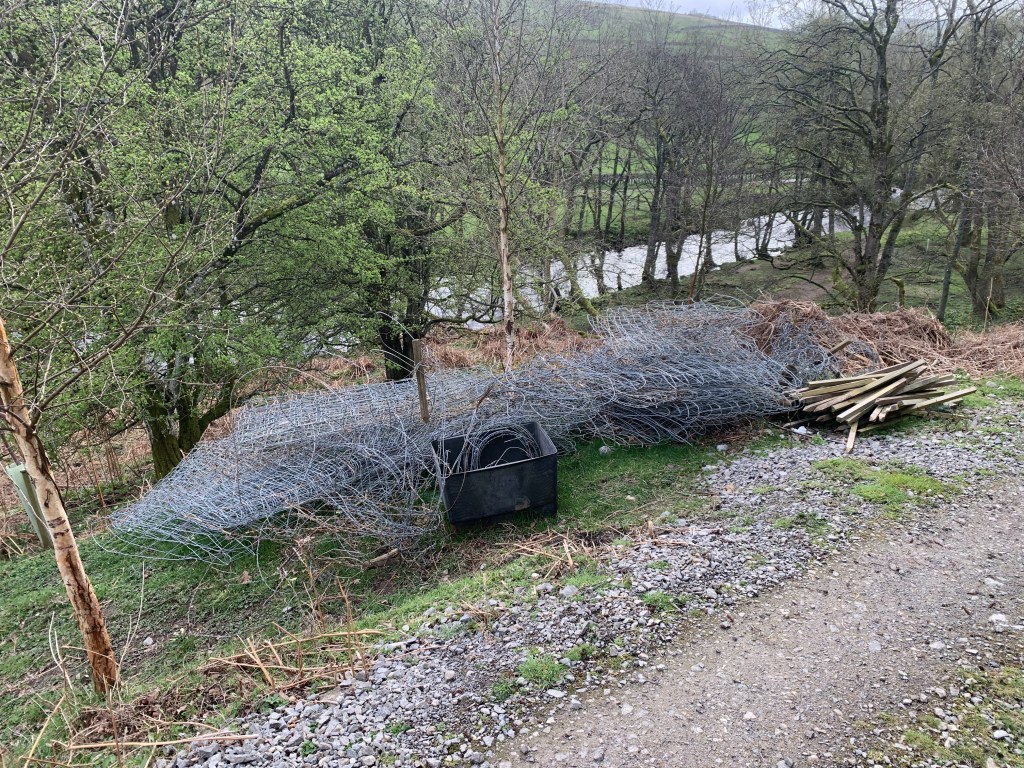
Our trusty planting crew are back on site this week, removing surplus materials from Fremington Edge (see above), ready to reuse below the bridleway in a brand new scheme. This project is a useful illustration of the mosaic of habitats we’re seeking to create: We’ve divided the area into 12 different compartments, and customised the planting spec for each—based on its own particular topography, vegetation, and existing tree cover.
The new scheme will see a mix of habitats created, including scrub woodland, wood pasture, and riparian. Plus, designated areas will be left for the natural regeneration of alder.
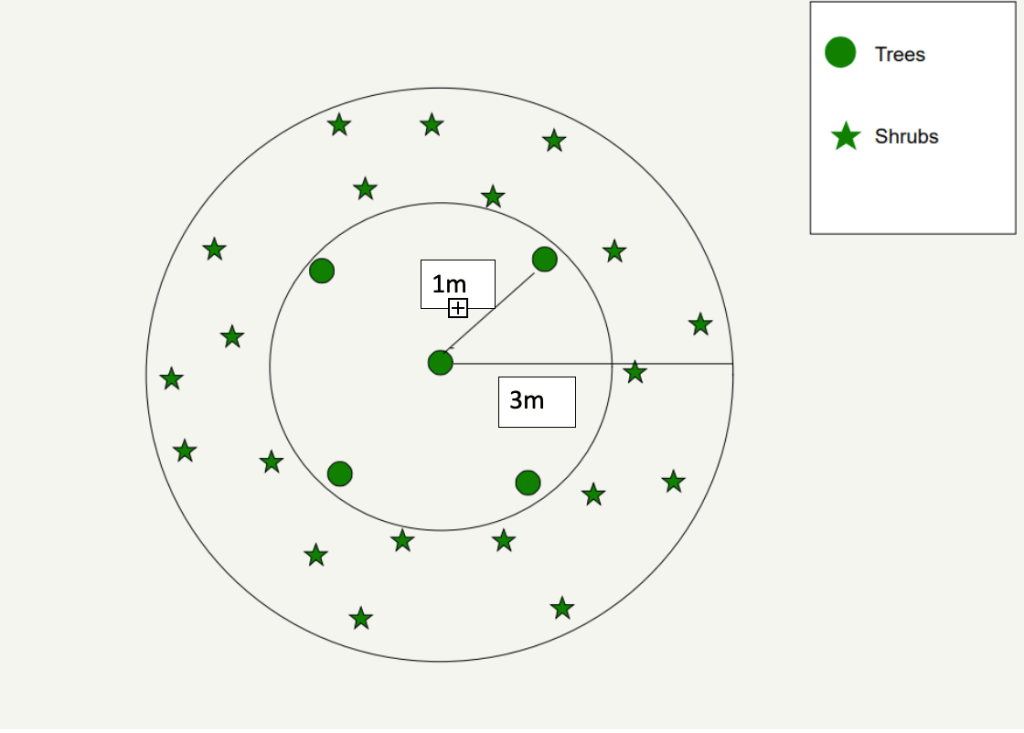
Lessons from the Fremington Edge plantation have also played an important role in our approach. We’re planting much earlier in the season, and using cell grown rather than bare whip saplings, in the hope of increasing their survival rate. We’re also trialling a Forestry England-approved method of ‘cluster planting’ to create our wood pasture—planting saplings very closely together in order to stimulate growth and suppress competing vegetation. Watch this space!
The benefits of this ‘cluster’ style of planting include fast establishment, quick weed suppression, accelerated height growth, and early canopy closure. Taken from, ‘Forest Development Types: A guide to the design and management of diverse forests in Britain Version 1.0‘
This planting scheme is 100% funded by the White Rose Forest via their Trees for Climate funding programme, part of Defra’s Nature for Climate fund. The White Rose Forest is the Community Forest for North and West Yorkshire. www.whiteroseforest.org.
Plant like a Pro
Fancy learning the tricks of the trade from some real tree planting pros? Join us for a special ‘planting skills’ volunteer day on Saturday 19th October, led by our professional planting crew, Fellside Forestry. This team has been heading-up large-scale tree planting projects across the North East and Scotland, for more than a decade, and will be sharing all they know as we work together on creating an area of wood pasture close to the footpath. Whether you’re a total novice or an old hat, we’re sure you’ll leave with a few new ideas!
‘Plant like a Pro’ volunteer event, Saturday 19th October, 10am-1pm @ Heggs Farm. Please email heggs.castle.cluster@gmail.com to reserve your place.
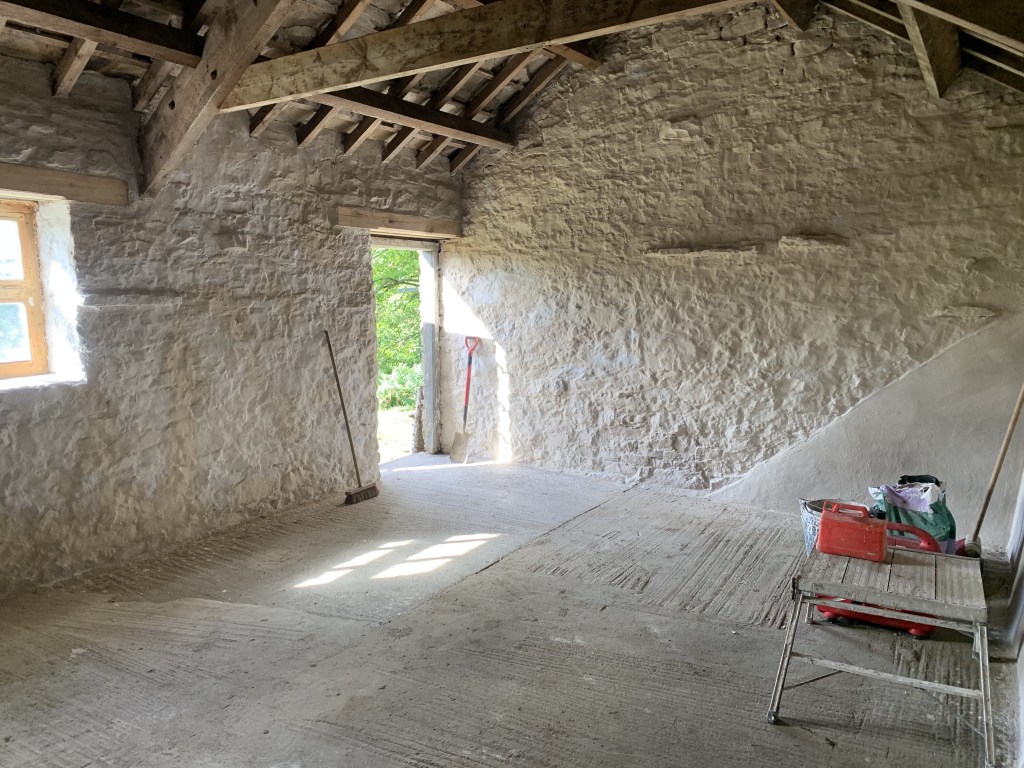
Our new volunteer hub @ Heggs is taking shape, thanks in part to funding from the Farming in Protected Landscapes scheme. It should be ready to christen in the new year.Yay.
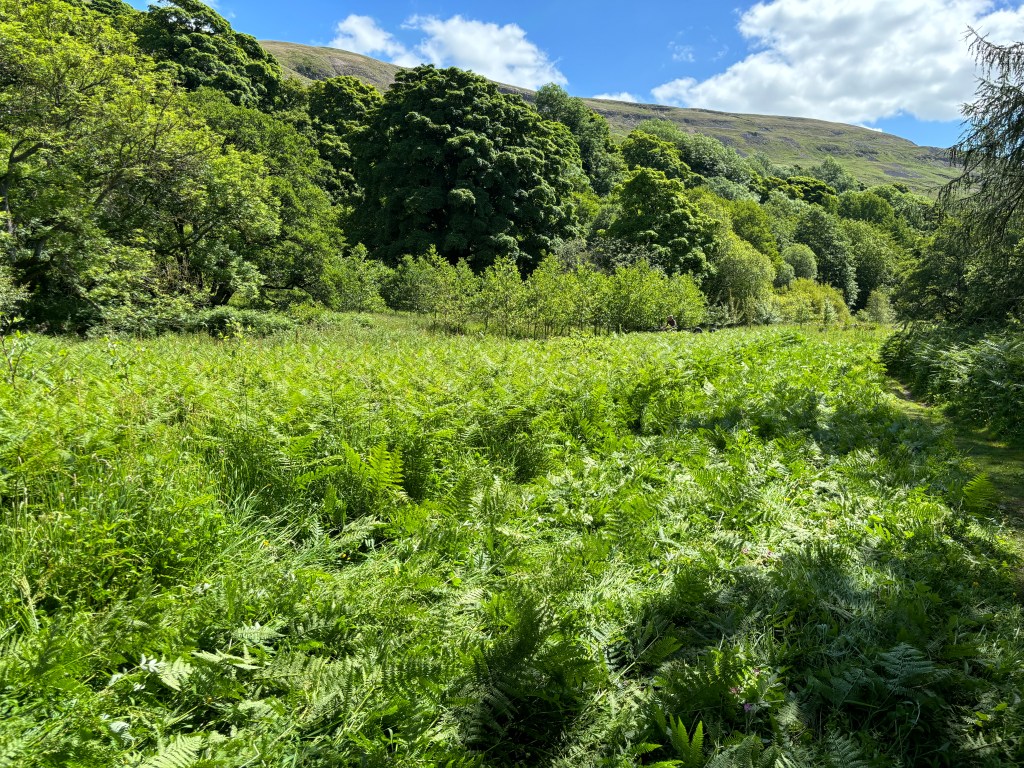
In 2020, the Tees-Swale: Naturally Connected project purchased a small bracken crusher for use by landowners/farmers across the area. It can be pulled behind any ATV with a tow bar, making it handy for sites with restricted access (just like ours!).
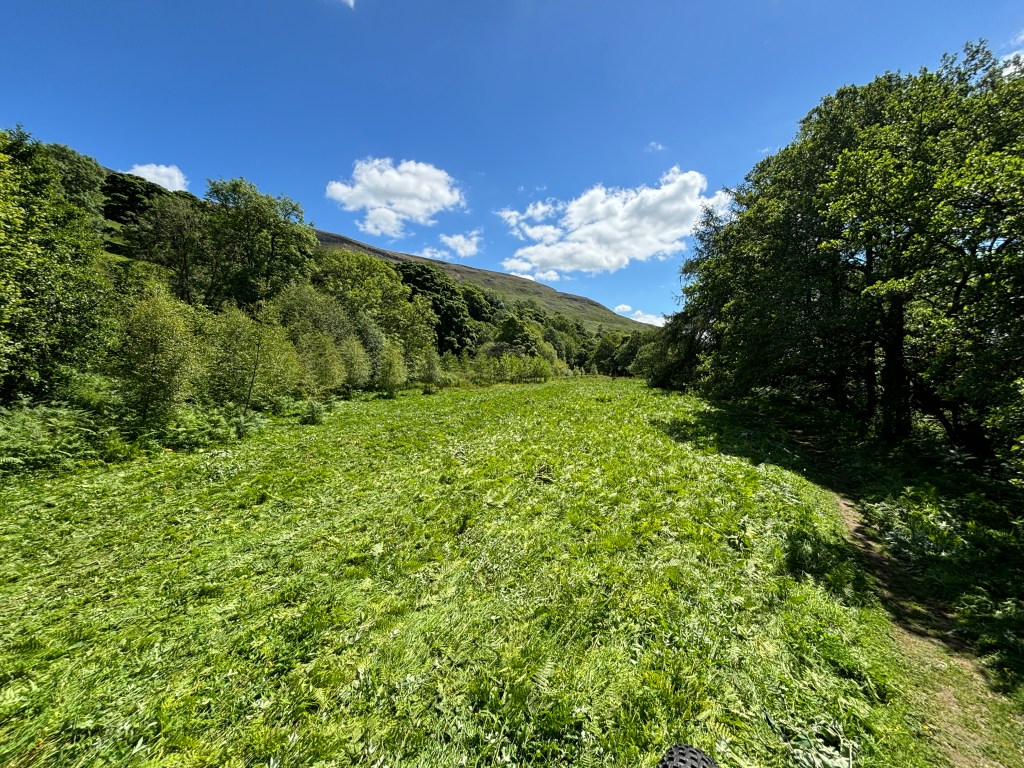
Though much of the bracken at Heggs-Castle is on steep, rocky slopes and can only be managed by hand, this small area of bracken-covered flood plain is perfect bracken-crusher territory, making quick work of the 0.18 ha expanse.
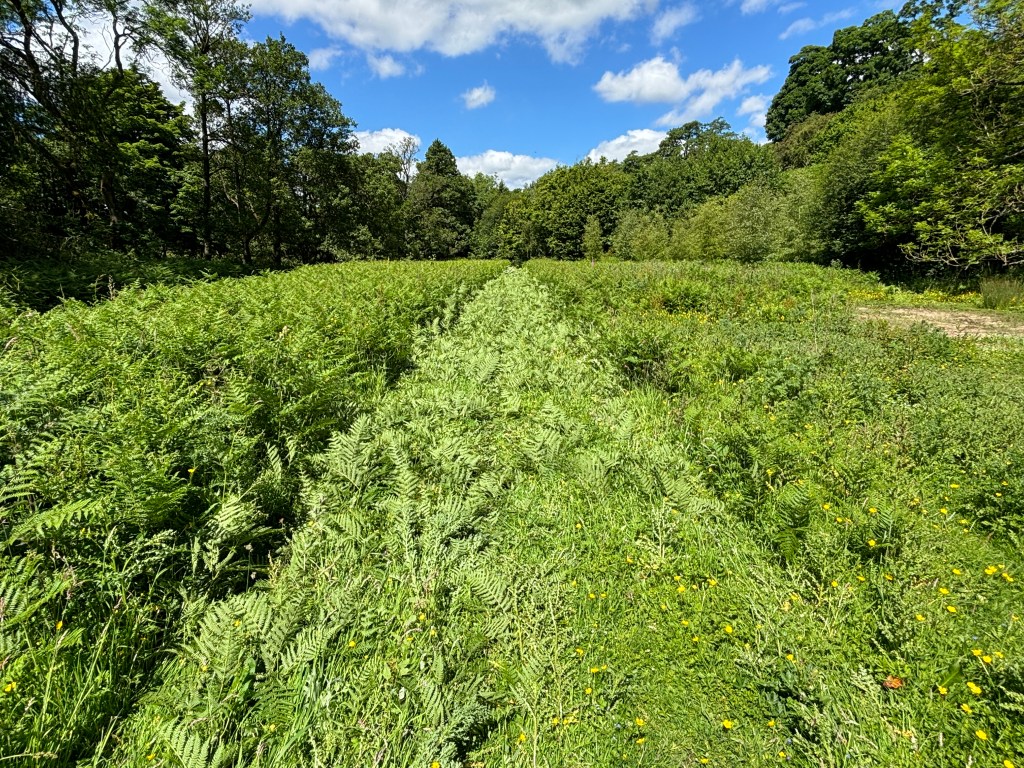
Before….After…
This is the third year of crushing using this method and we’ve seen a distinct improvement: The bracken is much shorter and sparser than on the surrounding slopes (where it’s already 6-7ft tall), and the biodiversity amongst the fonds has visibly increased, with wildflowers, ferns and grasses establishing themselves in healthy numbers.
We are not seeking to eradicate bracken altogether; it creates a nurturing environment for young saplings, locking moisture in the ground and releasing a rich source of phosphorous to the soil as it dies back and mulches down. However, left completely unchecked, it can quickly dominate an area and spread, killing out competing grasses and herbage. As with everything we’re experimenting with at Heggs-Castle, it’s about trying to restore a healthy balance.
Spot the difference! A satisfying first slice through the middle…
Top marks to Martin for actually doing the job under a hot sun, whilst I watched in the shade and gave the odd thumbs up…
We are hosting a guided walk on Saturday 28th September as part of the Yorkshire Rewilding Network’s Summer Site Visits program. This will be a great chance to mingle with likeminded individulas from across the county, learn more about YRN, and hear (and see) all we’ve been up to over the last few months. Places are limited so please reserve your spot on the Eventbrite booking page.
Hello, good afternoon and welcome. It has been a while since a new blog post has appeared and a lot longer since I’ve posted one. Due to unexpected and expected personal circumstances I have been very busy for the last 18 months and until the last week or two have only visited The Cluster a couple of times. ‘Stuff’ has been happening tho as Liz has explained (and hosted) , albeit on a small scale compared to our big planting of early 2023.
So how have our newly planted trees faired? One word sums up our thoughts on this… badly.
Unfortunately we had an exceptionally dry spring (less than 50% of average rainfall), which coupled with thin soils meant there simply wasn’t enough moisture to get the saplings to grow. We have surveyed for losses and it is just over a third across the whole site. Shrubby species did particularly poorly as did birch. We are about to start planning for next winter so we can replant the failures, possibly with a few changes?
That has certainly been a big negative but there has also been some wonderful positives.
Barn Owls are now regularly seen. There has been an increase in numbers in the two dales in recent years but the longer grass on The Cluster is proving quite a magnet for them. Talking of plants, we have seen quite a change in the diversity and number in the last two years. It’s difficult to put a lot of this change into words as much is subtle (it would also take this poor typist too long). The place also ‘feels’ different. It seems settled somehow, still changing but happy with itself.
So as it’s beyond my physical and literary skills to convey what I’m on about, it might be best if I just show you what I mean. So if anyone fancies a 2-3hr wander in the next week or two, get in touch and we will try and organise an informal wander around so I can show you what I mean.
Broad Bodied Chaser taken just before the rain started today.
So this week has seen a bit of wandering around and discovering things. In one of our new scrapes (dug last summer) we found this freshly emerged Broad Bodied Chaser. Quite the beast!
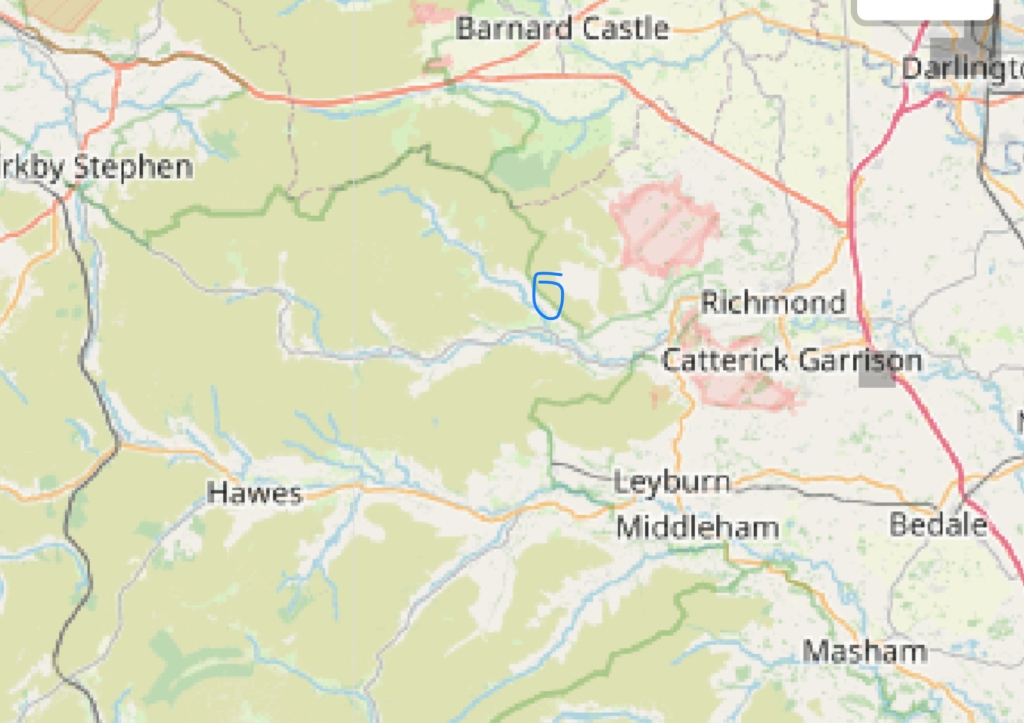
We also found some Water Violet which is very unusual locally. The nearest record is the other side of Catterick (The Cluster roughly marked with a blue circle). It is declining nationally due to the loss of wetlands, hence us creating more!
Distribution of Water Violet locally (from BSBI Plant Atlas 2020
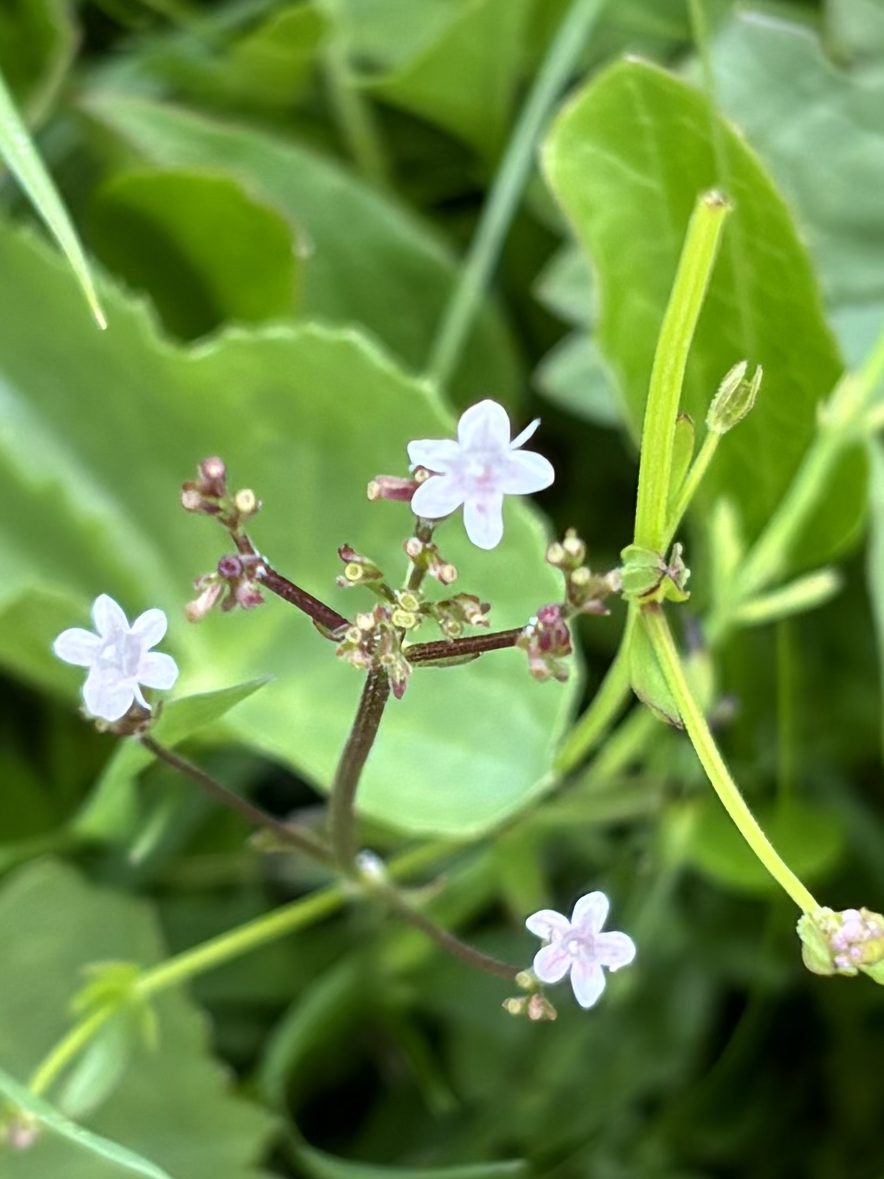
Below is a photo of what Water Violet flowers look like.
We have had an amazing year for Cowslips too. Although these have now finished flowering the seed heads are easy to see. Theres lots more Quaking Grass than previously seen too.
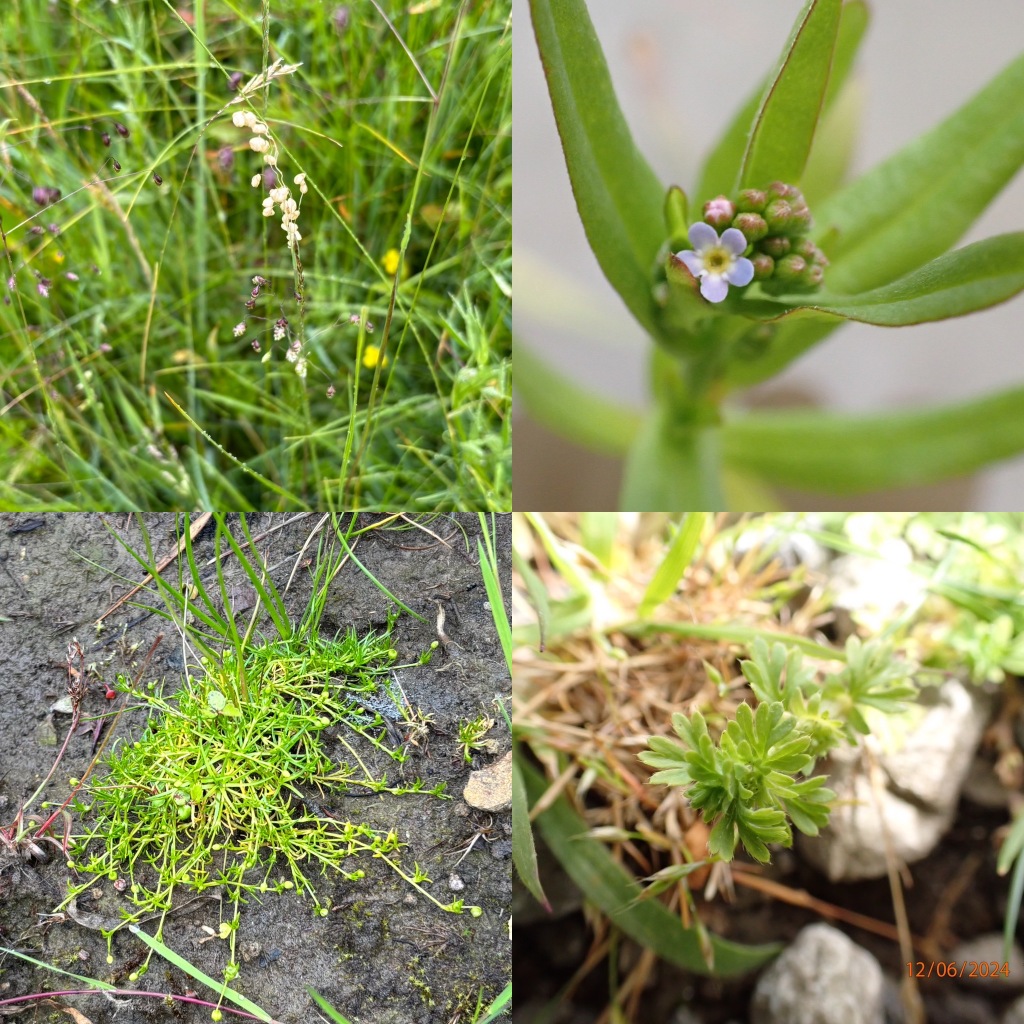
I’ve been on hands and knees looking at very small plants too and found a couple I haven’t seen (or heard of) before, including Procumbent Pearlwort and Slender Parsley-Piert. They’re not rare just easily overlooked.
From L-R, Quaking Grass, an as yet unidentified Myosotis, Procumbent Pearlwort and Slender Parsley-Piert
It’s nearly the summer solstice and I’m sat at home typing this blog with it raining, and with the temperature scraping into double figures. We had our bird ringer around earlier in the week and The Cluster’s nest boxes have faired similarly to many many others we’re told. Lots of failures with dead chicks still in the boxes. Not surprising as there have been very few insects about for them to eat. My moth trapping in Fremington has been the worst I can remember with very few specimens caught (not just me btw). And butterflies… very few seen also. Let us hope this is purely weather related.
Many of these sightings and their location end up on iNaturalist which is what we use as our recording tool. It is free and easy to use. We have set The Cluster up as a ‘Project’ on there (search ‘Projects… Heggs-Castle’ and I’m on there as ‘User… martinww’ where I put up lots of other local and not so local sightings). Any records that anyone enters that were seen and photographed (with a phone) within our project boundary are automatically put into our ‘project’ as phone pix contain a geo-reference.
So I’ll love and leave you. I’d go and find some more flowers but I haven’t dried out since being out on The Cluster earlier. That chaser must be wondering why it bothered!
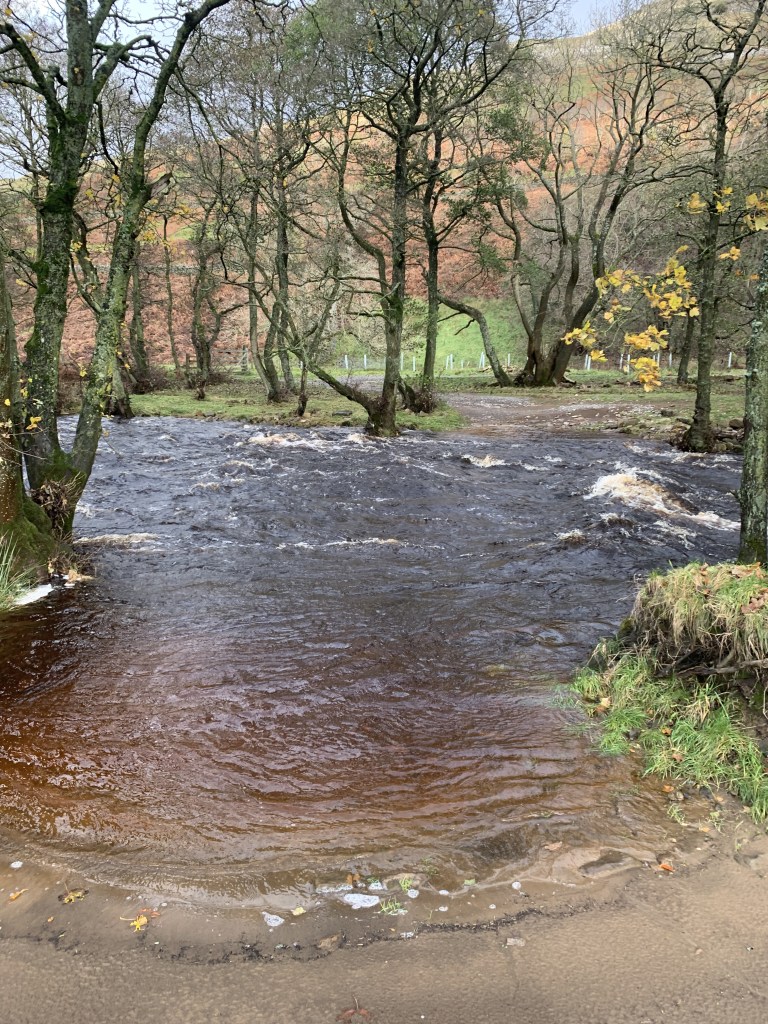
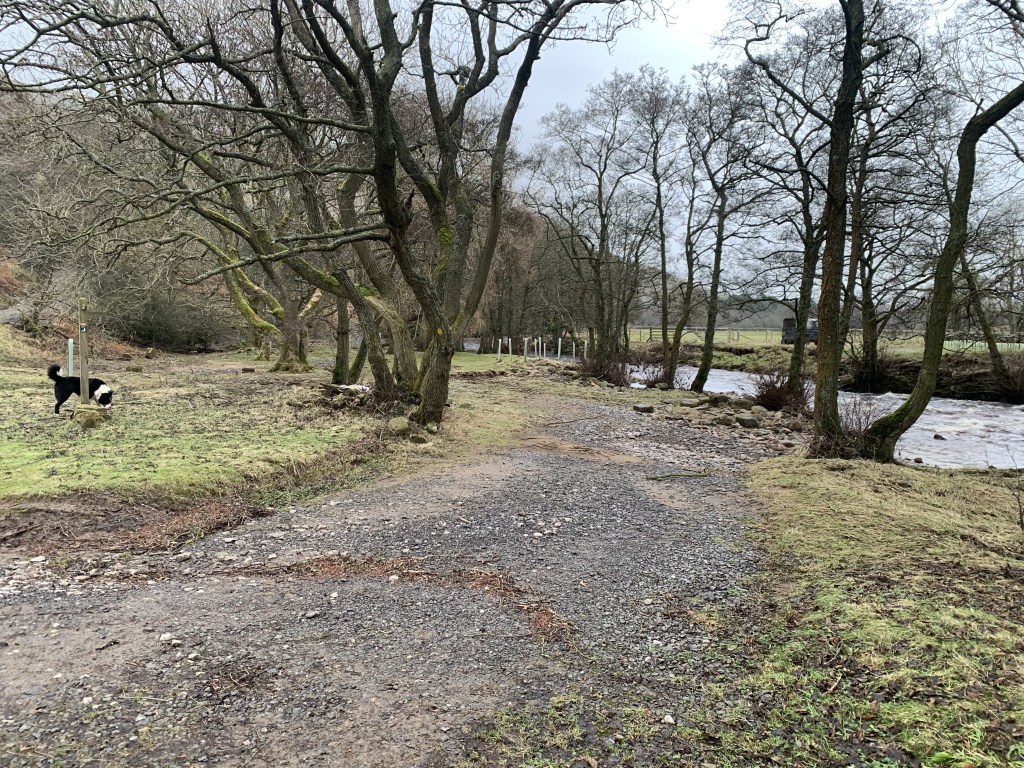
It was no surprise to learn that the last 5 months have been the wettest on record for Yorkshire since 1872. The rain simply hasn’t stopped. We have had to redraw our flood plain boundaries; accommodate new springs and run off pathways; rethink our ford access contingency plan; and abandon a number of projects entirely. Yep, winter 2023-24 has certainly given us plenty to think about re the continuing trend of wetter and warmer weather (aka climate change).
Scrapes full to bursting throughout winter.The riparian landscape changed as often as the ebb and flow of the Arkle. Ford crossings were impossible for much of the winter; and continue to fluctuate.Spot the tide line of debris in the foreground. The Arkle frequently spilled over throughout winter.
We realise we’ve been pretty quiet too: Partly because ground conditions have made the volunteer projects we had in mind logistically impossible; partly because we’ve been gathering our thoughts after what feels like a hectic year of constant works, and comings and goings.
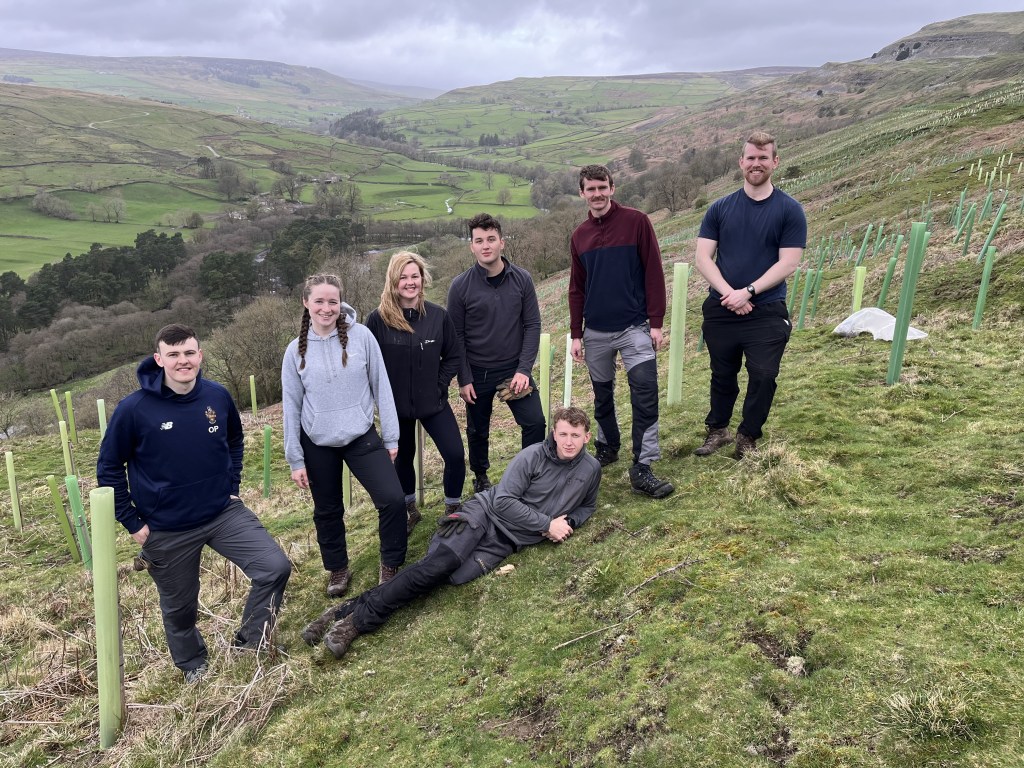
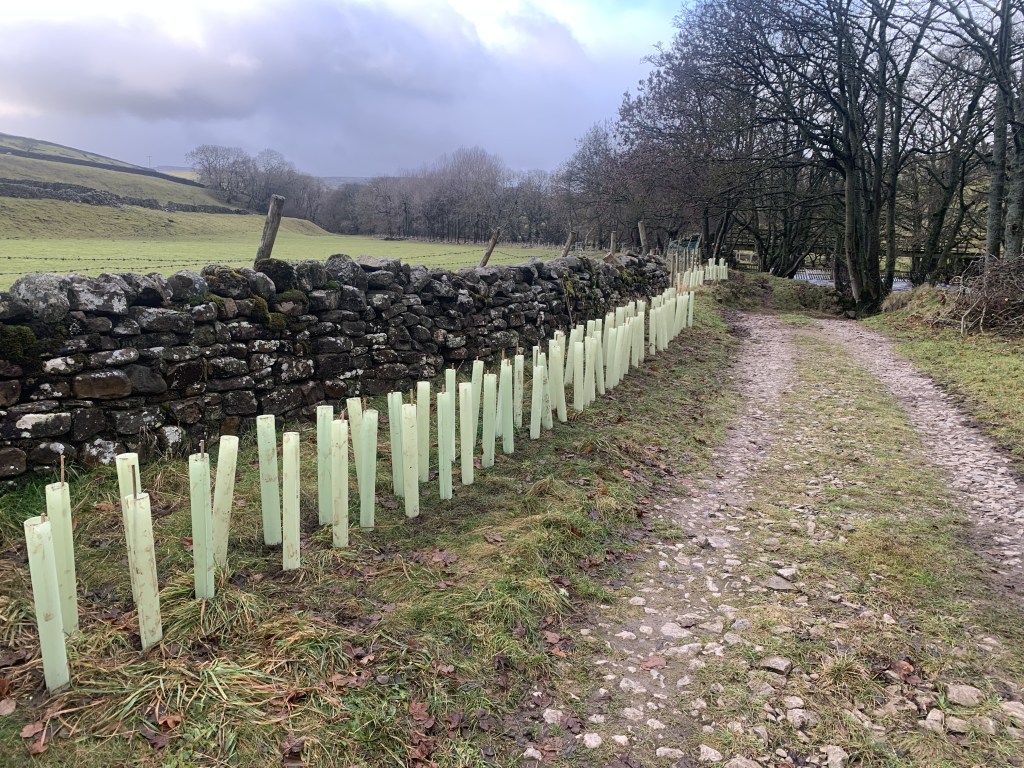
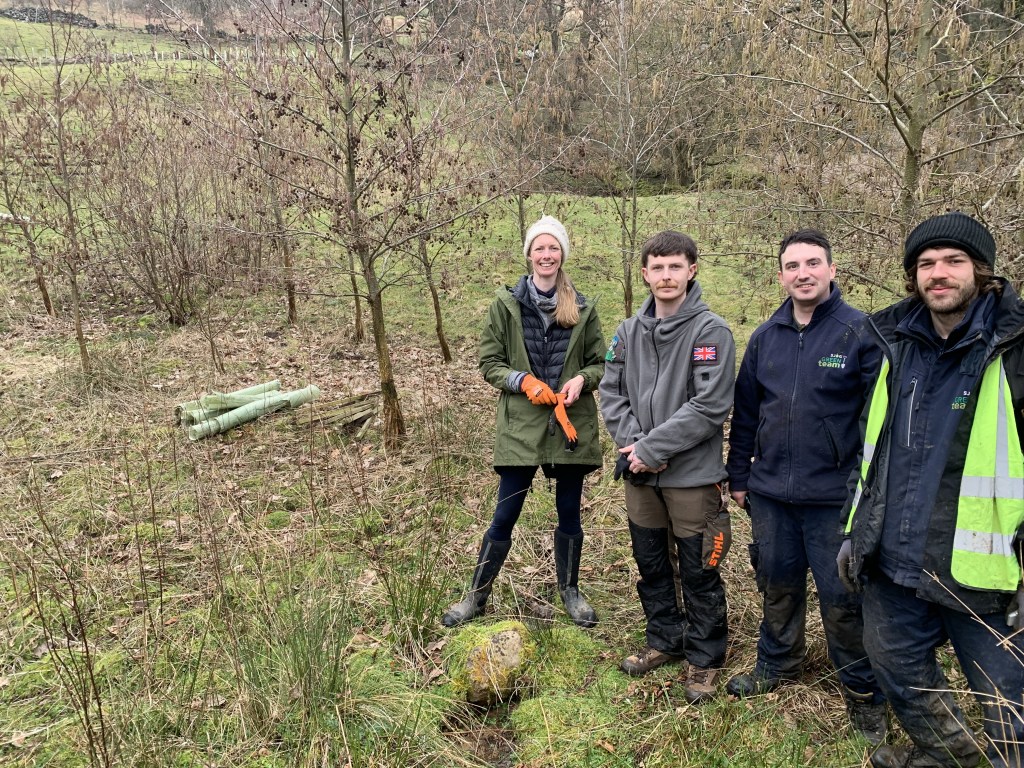
Progress has been made however: Groups of corporate and army volunteers spent a couple of rare sunny days up the fell, fettling windblown saplings and removing tree guards from more established trees. We’ve worked together with Sustainable Swaledale throughout the season, removing tubes from a neighbouring 9-acre plantation, and planting 30m of new hedging. Unnecessary internal fencing has been taken down, making the site more connective and wildlife-friendly. And a team from the OUSEWEM NFM project recorded tadpoles in several of our scrapes (which have been permanently full of water since November).
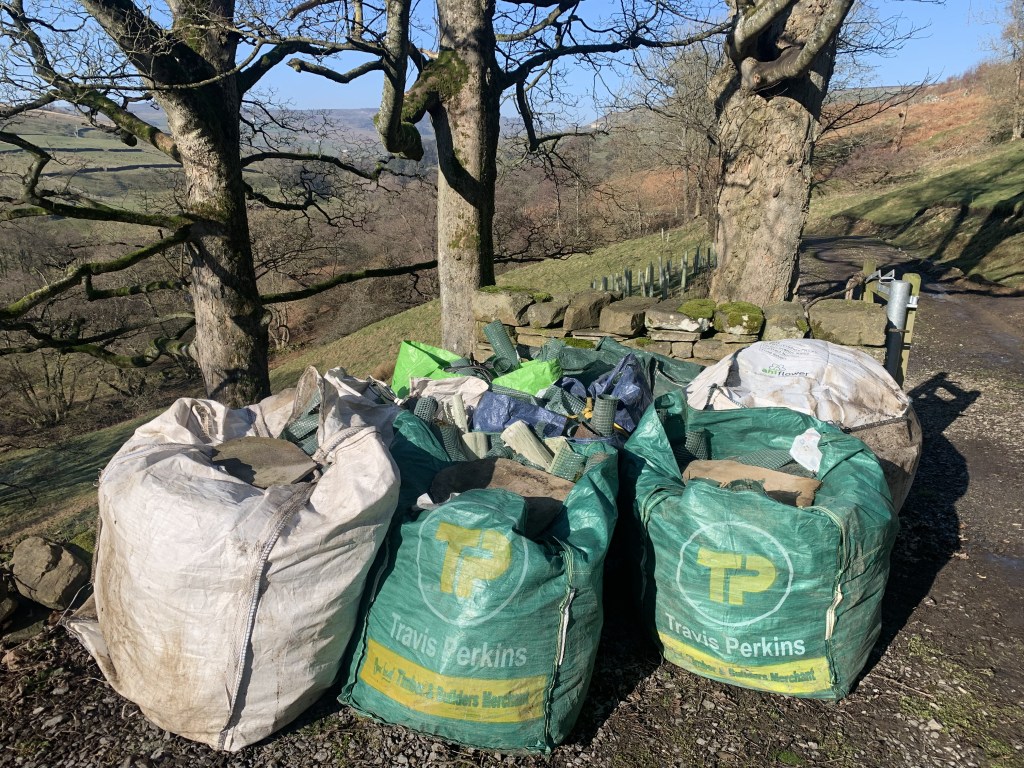
Volunteered members of Company 14 from Catterick Camp looking happy at clocking-off time.30m of new hedgerow planted in the flood plain, courtesy of Sustainable Swaledale volunteers.Volunteered gardeners from St John of God Hospitaller Services in front of newly de-tubed trees.Some of the 30+ dumpy bags of tree tubes removed and ready to go for recycling.View from our guided tour of the newly-planted woodland. Credit to Gray at Scenic View Gallery, Reeth.Remnants of an old, 300m fenceline, ready for scrap collection.
So, what next? Spring has definitely sprung, and with it a renewed determination to make the most of the drier months ahead, when everything feels just that little bit easier. We’ve got a few exciting projects in the pipeline, along with some interesting volunteer days; so please keep an eye out for our calendar of events (coming soon).
How else can you get involved? If you’re walking or riding through the cluster in the coming weeks, we’d really appreciate your help by adding any nesting bird sightings to our iNaturalist project page. Kestrel, barn owl and tawny owl have also been seen hunting across the site recently: Please join us in logging all birds of prey you spot on the free BirdTrack app, which is used to determine local population sizes.
Until next time, happy spring! Liz, Martin & Andrew.
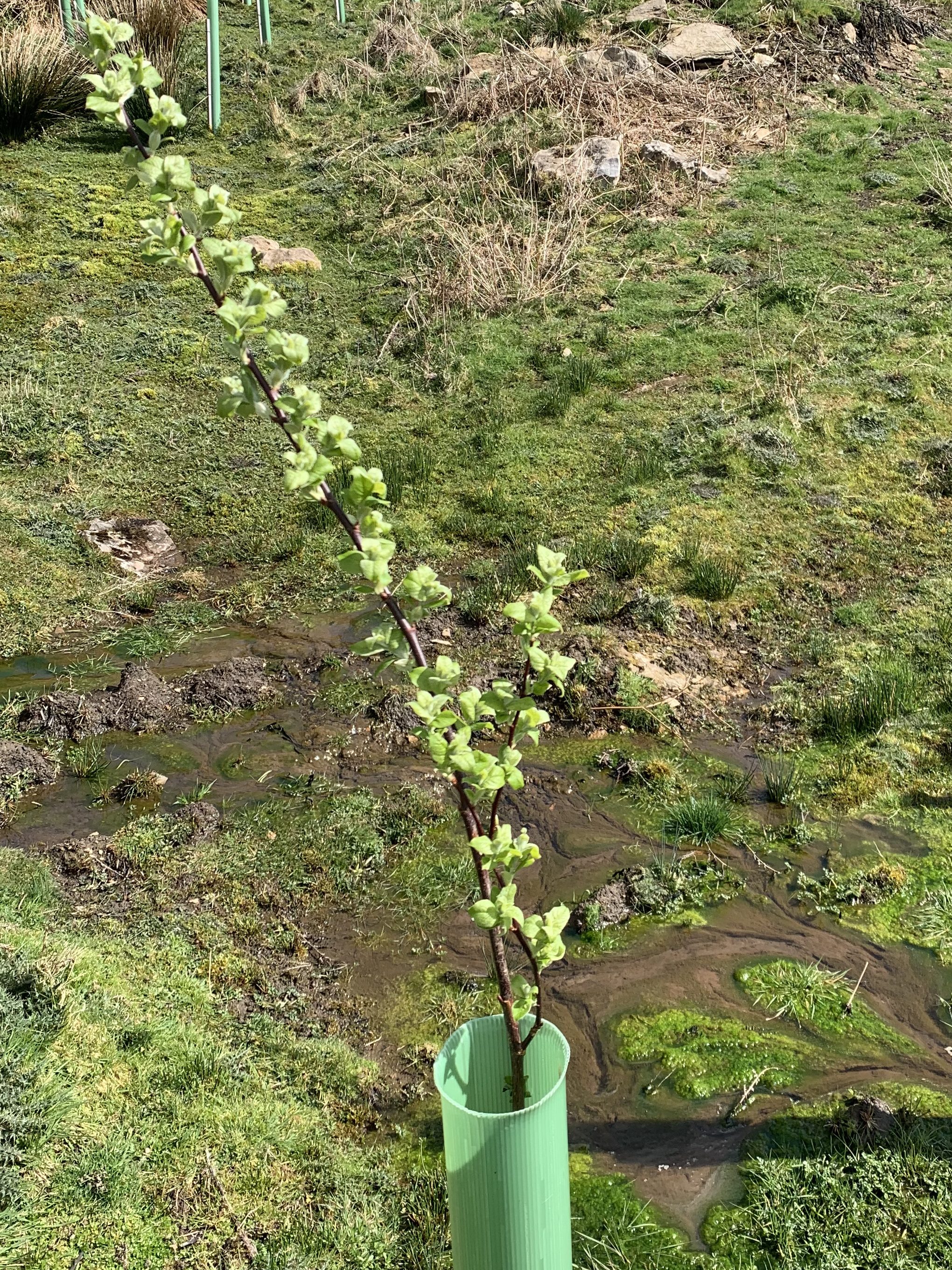
One of our thriving, one year-old saplings, planted on Fremington Edge during winter 2022-23. We will be doing a full beat up and survival count in May; ready to restock any losses in winter 2024-25.
Drone flyover of the 32ha woodland creation at Heggs-Castle Cluster
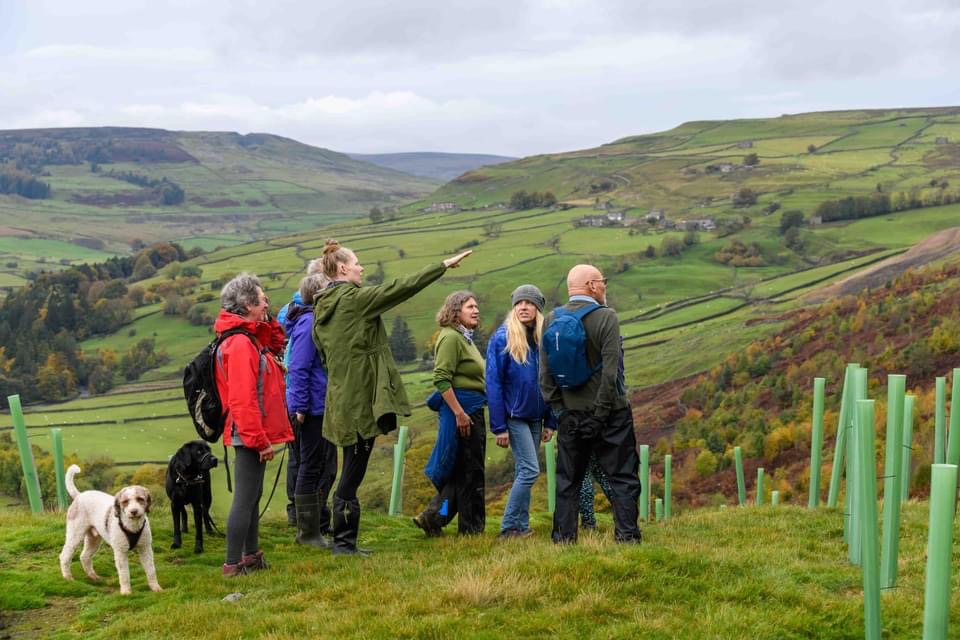
Join us on Sunday 29th October, 10:30-12:30, for a welcome walking tour exploring the new 32ha Heggs-Castle woodland.
A total of 33,630 stems, comprising 16 different broadleaf species, were planted by a dedicated crew between December 2022-March 2023; along with the installation of 3km of new fencing and a forestry maintenance track.
We’ll meander through a small area of the site, looking at how different species and tree guards are faring, and answering any questions you have. Along the way, we’ll also share some of the history of the project, the lessons learned – good, bad and ugly – our initial health check results, and plans for ongoing monitoring and maintenance.
There’ll be plenty of time for feedback and knowledge sharing, as well as flask breaks – so please bring your own tipple of choice.
Parking: Heggs Ford is accessible by 4WD only. Other vehicles may use the layby on Arkengarthdale Road, at the top of the Heggs access track https://w3w.co/slicing.school.slouched
NB Car pooling is recommended due to limited space. Please allow 10-15 mins to walk down to the ford.
Terrain: The site is steep and uneven in places. Whilst our walking route will follow the forestry track, we will be venturing off at regular intervals. A good level of fitness is recommended plus sturdy footwear and all-weather clothing.
Booking: This event is being run in collaboration with Sustainable Swaledale. Please email info@sustainableswaledale.org to register your interest so that we can gauge numbers. For any specific questions about the site logistics, please email Liz at heggsfarm@gmail.com.


 Heggs-Castle Renaturing Project