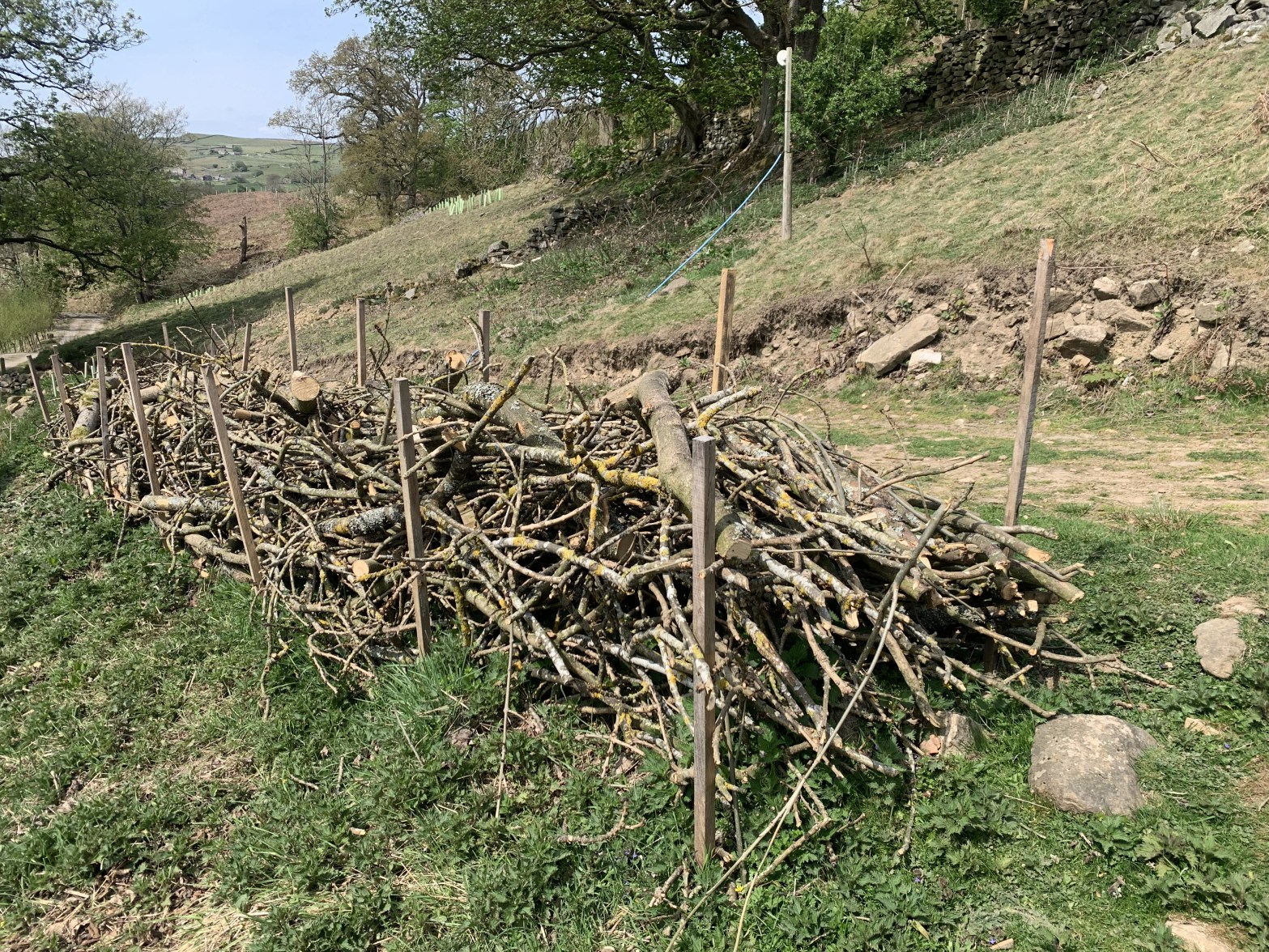
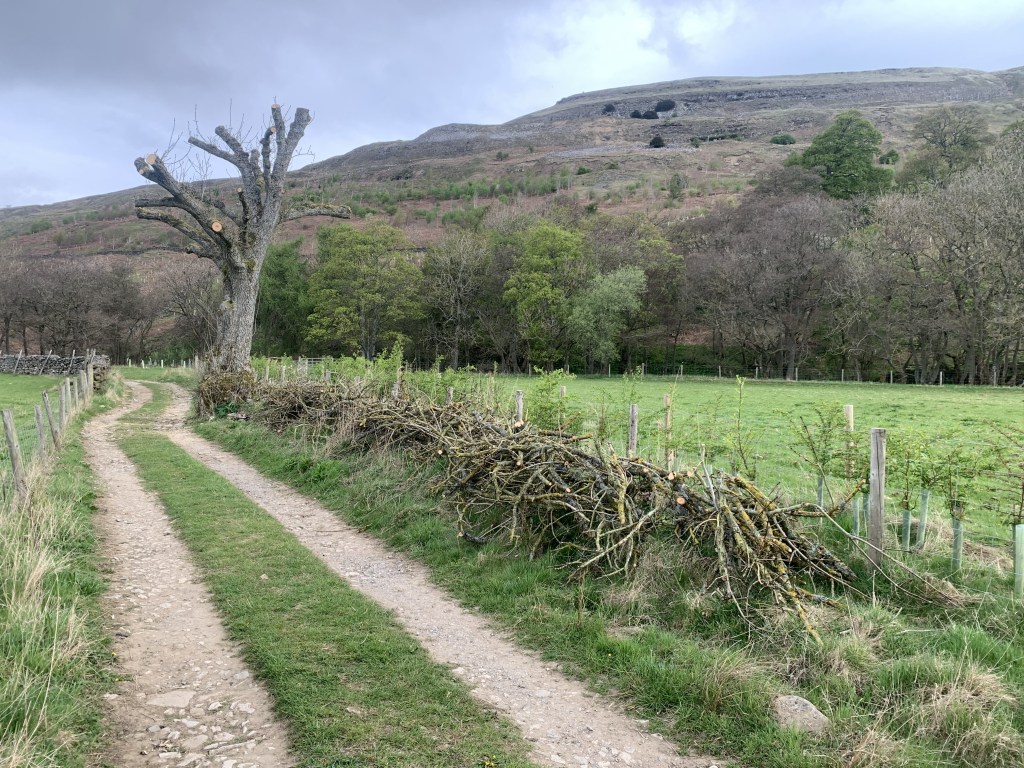
At one point in time, ash was the boundary tree of choice in the Dales, and unfortunately we’re likely to lose a significant percentage to dieback; an easily transmutable disease affecting an average of 9/10 ash trees.
Many lie on PROW too, putting the onus on landowners to keep a careful eye on the health of their trees, and take action if or when it deteriorates to a ‘dangerous’ level. (Read the Yorkshire Dales National Park position statement here).
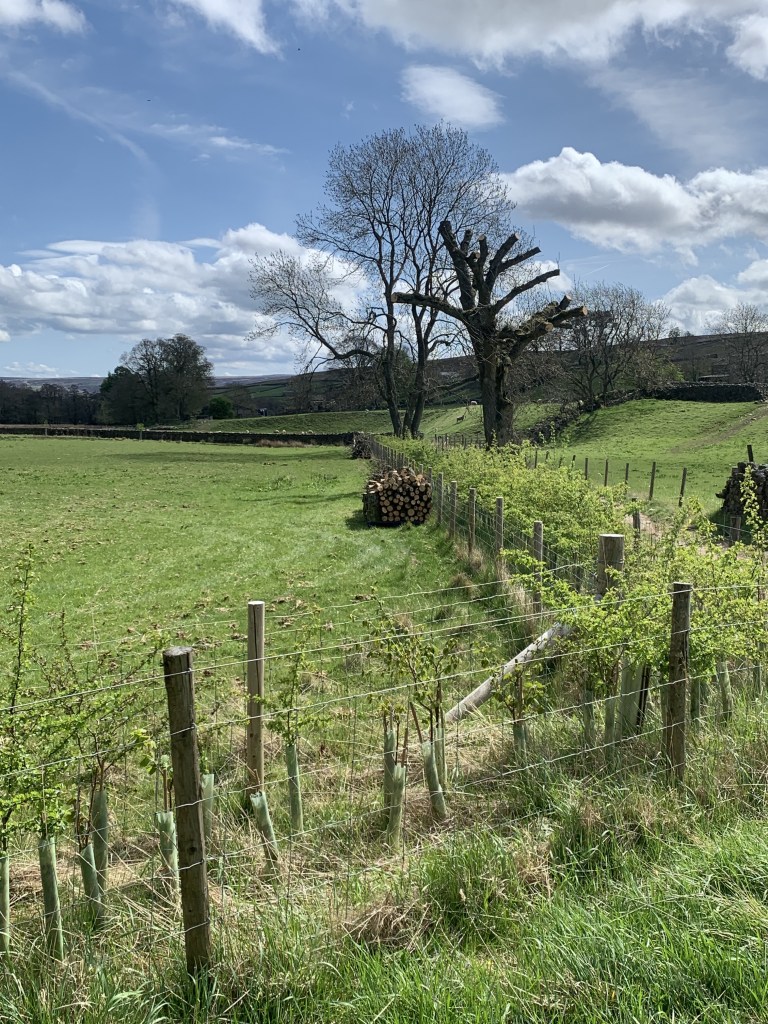
After a visit from our local Forestry Commission chap this winter, we agreed that works were needed on 6 ash trees lying alongside the footpaths and bridleway that pass through the cluster.
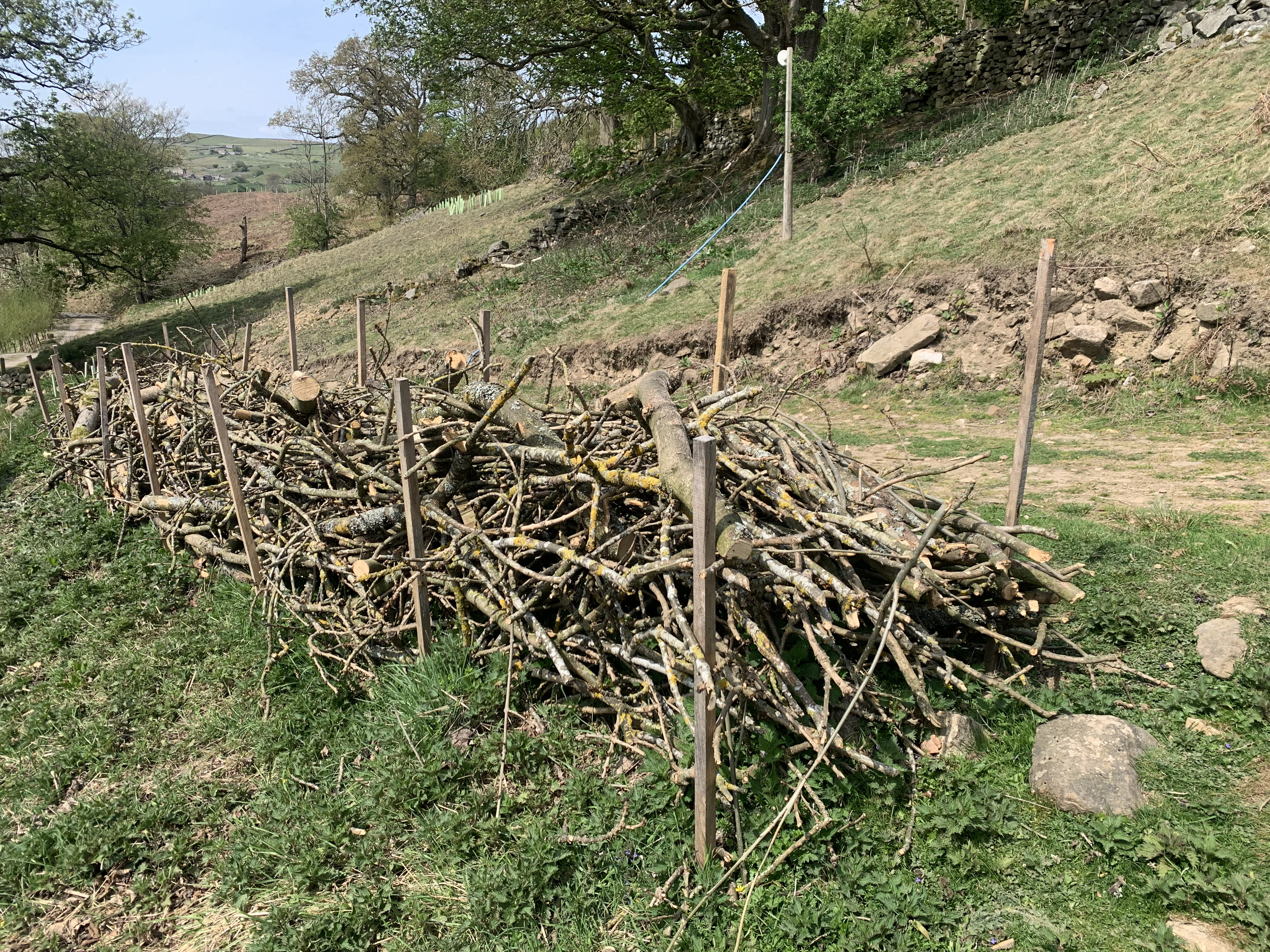
Where safe to do so, we decided to leave a large part of the trunk intact (which will hopefully stay standing for another decade or more); and to create brash piles or ‘dead hedges‘ nearby with all materials too small for firewood rounds. These provide hiding places and nesting habitats for all sorts of creatures, as well as food for insects.
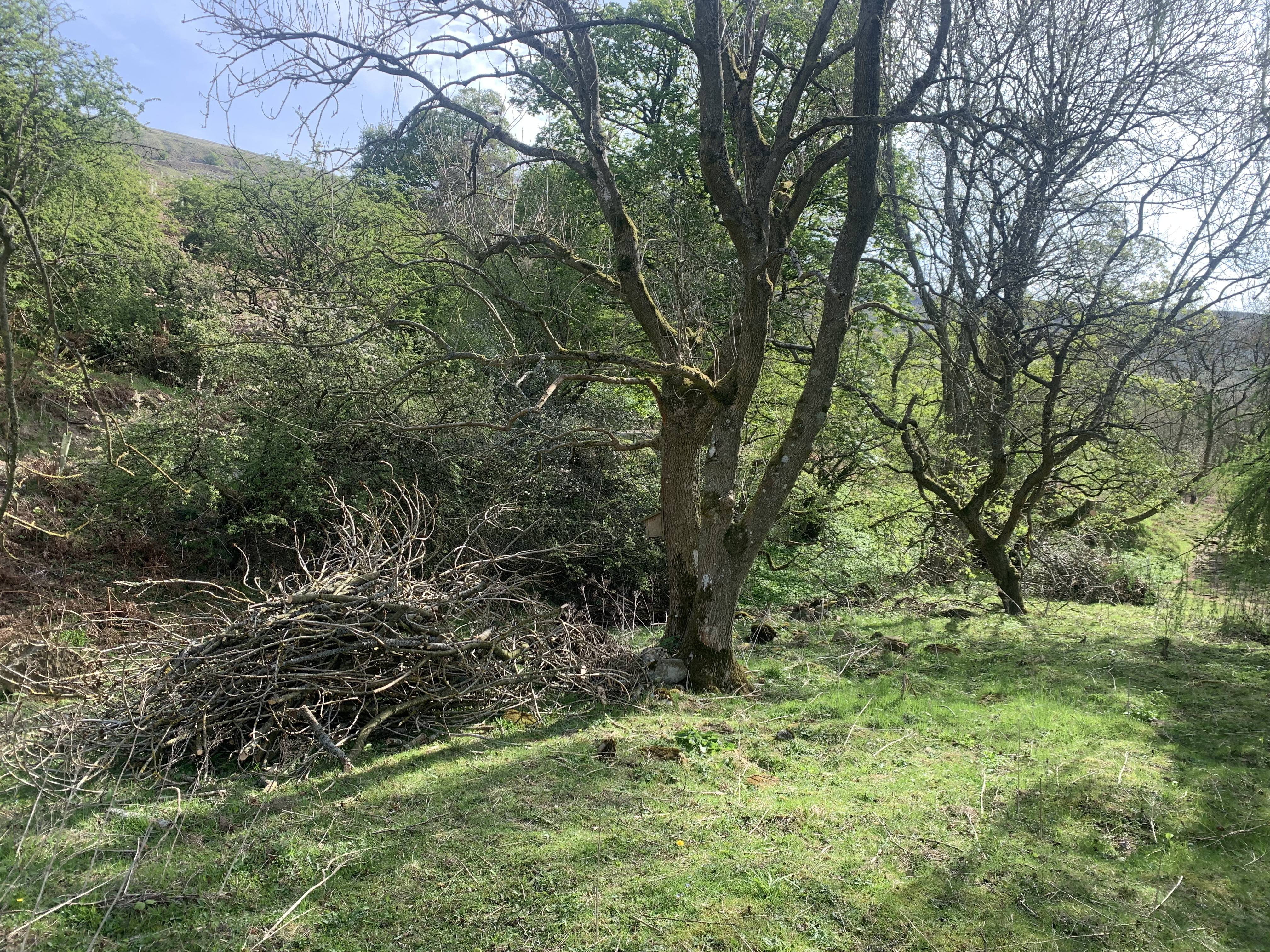
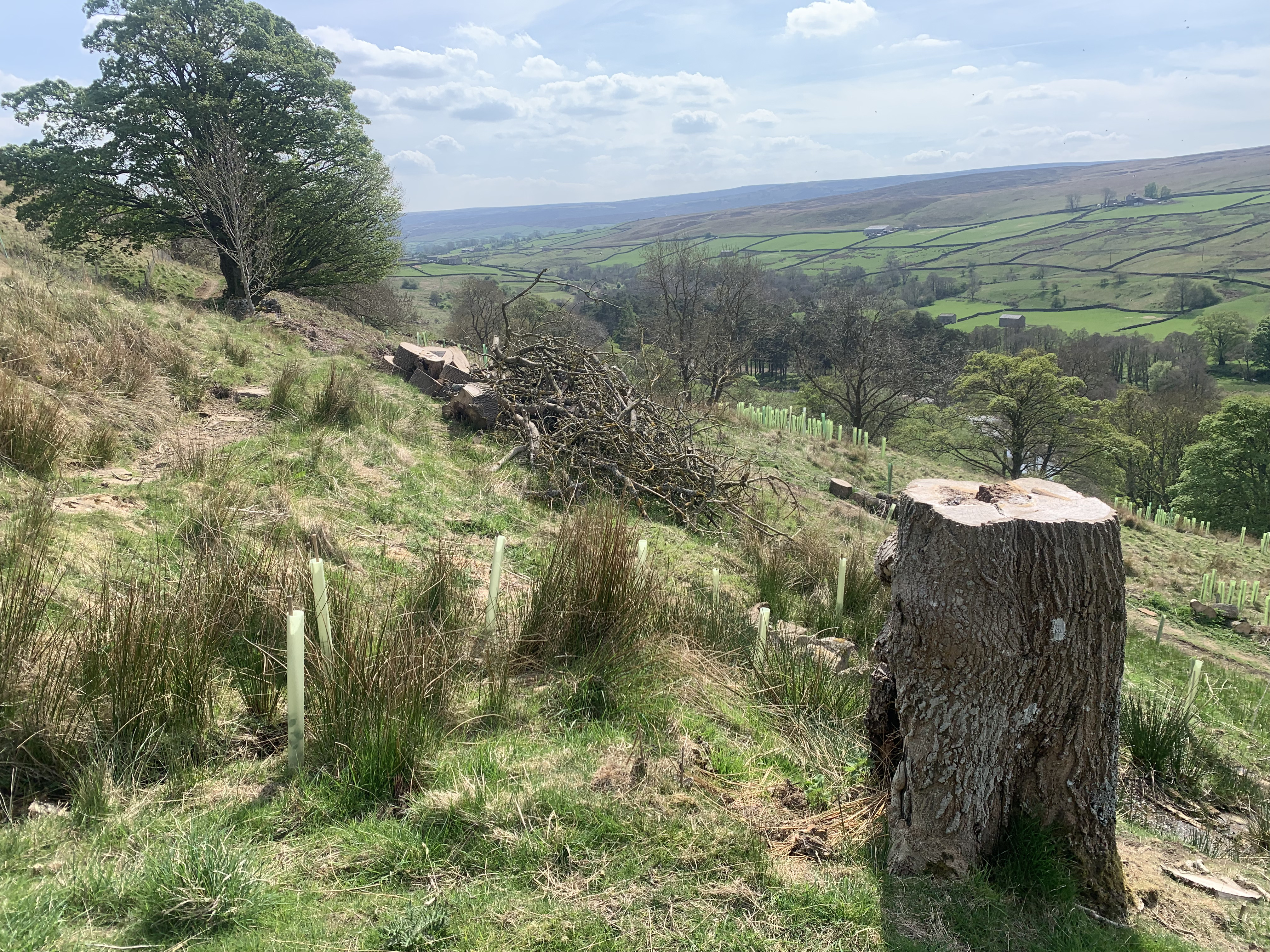
It’s never easy to lose living habitat. However, we feel a little bit better knowing that we’ve done what we can to keep intervention to a minimum, and mitigate the loss.
There’s good news too that many of our ash are still faring well, with some showing no signs of dieback at all. Long may that continue!
Many thanks to local arborist Rob Foster, for helping us to devise an action plan and work sensitively in the best interests of each tree.
 Heggs-Castle Renaturing Project