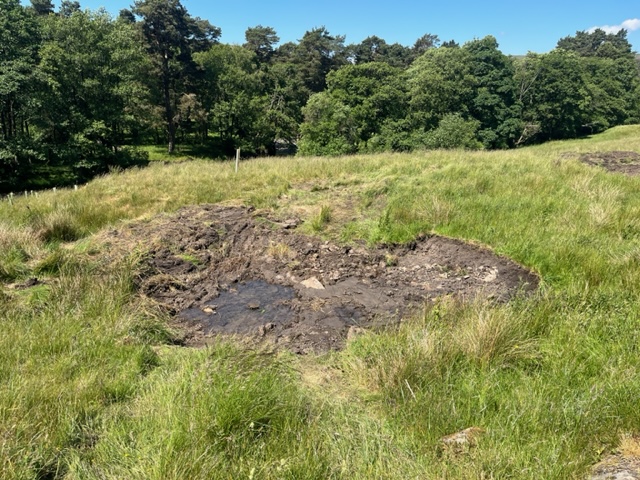
If you go down to the cluster today you’re in for a big surprise… Our flood plain has been transformed by a series of scrapes and bunds — the final intervention in this year’s series of natural flood management works.
Scrapes and bunds help by temporarily storing rain and surface water — thereby increasing the flood plain storage capacity — and can additionally act as silt traps to reduce the effects of soil erosion.

Less than 1 metre in depth, and with gently sloping sides, they stay damp (and muddy!) for much of the year, providing much needed habitat and important feeding areas for a wide range of aquatic wildlife — from wetland plants and insects such as hoverflies, to amphibians and breeding wading birds. (These become particularly important in periods of extended drought).
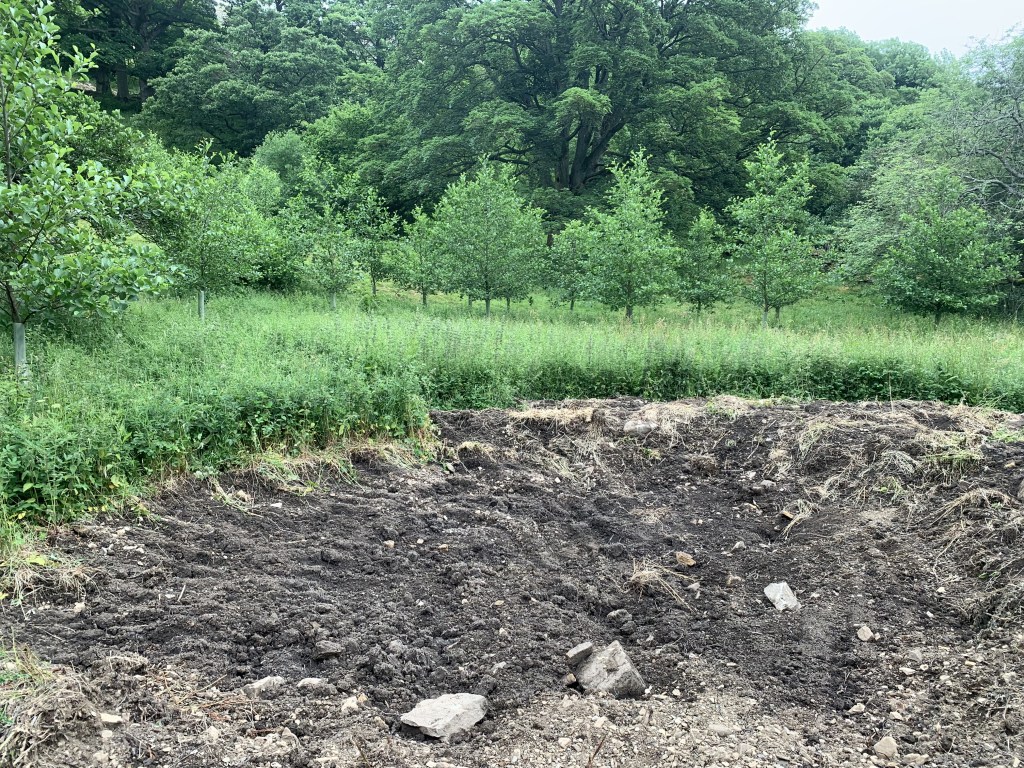
Our scrapes were excavated in early June 2023, and a third had begun to fill with water within the first week.
Though first and foremost a natural flood management intervention, we are equally excited by the possibilities they might bring for new species of wildlife. We will be monitoring the scrapes closely over the coming months and years to see what happens!
The scrapes can be viewed all along the riverside footpath, between the field gate at the entrance to Heggs and the gated step stile at the Castle end. Please let us know if you spot any interesting species making use of the new habitat and/or record your findings on our inaturalist project page.
Many thanks to Tim at the Yorkshire Dales Rivers Trust for guiding the works, and to expert digger driver Peter, for navigating our site so sensitively.
 Heggs-Castle Renaturing Project